A Forest Rock Knowledge Base Guide: By Paul Martin

Introduction
As building automation systems continue to evolve towards cloud-connected architectures, edge computing, and software-defined infrastructure, organisations are increasingly looking for more flexible ways to deploy and manage Niagara Framework. Containerized Niagara addresses this by combining Niagara's proven supervisory capabilities with modern container deployment practices used throughout enterprise IT.
Containerized Niagara offers a modern deployment model that packages Niagara Framework, the Java Runtime Environment (JRE), and all required runtime components into a Docker® container. Rather than installing Niagara directly onto dedicated hardware or an operating system, the entire application stack is delivered as a portable and consistent software package.
This approach brings many of the deployment, maintenance, and lifecycle management advantages already common in enterprise IT environments into the world of smart buildings and operational technology (OT).
What is Containerized Niagara?
-20260721-152355.png?cb=daf941ef4a33157484e9d9d1a5a6b7bd)
Containerized Niagara is a deployment mechanism where Niagara Framework runs inside a Docker container rather than being installed directly onto a physical or virtual machine.
Each container includes:
-
Niagara Framework core software
-
Java Runtime Environment (JRE)
-
Required runtime modules
-
Supporting libraries and dependencies
-
Runtime configuration
By packaging all dependencies together, Containerized Niagara provides a predictable and repeatable deployment experience across supported platforms. This helps minimise compatibility issues and simplifies software distribution, upgrades, and maintenance.
Key Benefits
✅ Simplified deployment
✅ Faster provisioning
✅ Consistent runtime environments
✅ Easier upgrades and rollbacks
✅ Improved deployment flexibility
✅ Cloud-native compatibility
✅ Support for modern DevOps and CI/CD workflows
✅ Portable deployment across supported hardware platforms
Supported Hardware Architectures
Containerized Niagara supports multiple processor architectures, allowing organisations to select hardware that best meets their performance, power, and budget requirements.
AMD64 (x86)
Commonly used in:
-
Industrial PCs
-
Edge servers
-
Virtual machines
-
Cloud-hosted infrastructure
ARM64
Commonly used in:
-
Embedded edge devices
-
Industrial gateways
-
Single-board computers
-
Low-power edge computing platforms
Custom Architectures
For OEM deployments, Tridium can provide support for additional architectures where Niagara forms part of a bespoke hardware solution.
Linux Requirement
Containerized Niagara currently requires a supported Linux host operating system running Docker Engine.
Docker runtime environments on Windows and macOS are not supported as production deployment platforms.
Authentication Options
Containerized Niagara supports two authentication models.
File Domain Authentication
This is the traditional Niagara authentication model where user accounts are stored locally within the Niagara station.
Benefits
-
Simple configuration
-
No external dependencies
-
Suitable for standalone deployments
-
Familiar management approach for Niagara engineers
Typical Applications
-
Small sites
-
Standalone supervisors
-
Isolated OT networks
-
JACE replacement projects
Native Domain Authentication
Native Domain Authentication enables Niagara to integrate with external identity management systems.
Benefits
-
Centralised user management
-
Improved security governance
-
Simplified credential administration
-
Better alignment with enterprise IT policies
Typical Applications
-
Large organisations
-
Corporate estates
-
Multi-site deployments
-
Cloud-hosted Niagara environments
-
Managed service offerings
Why Containerization Matters
Traditional Niagara deployments typically involve installing software directly onto a server operating system and managing updates individually.
A typical upgrade process often requires:
-
Accessing the device
-
Installing the Niagara update
-
Updating modules
-
Verifying compatibility
-
Performing testing and validation
With Containerized Niagara, the deployment process becomes more streamlined.
A single updated container image can include:
-
New Niagara versions
-
Updated Java runtime components
-
Updated modules
-
Security patches
-
Configuration changes
The result is a more repeatable and predictable upgrade process.
Environment Consistency
Development, testing, and production environments can all run exactly the same container image.
This significantly reduces configuration drift and helps eliminate the classic:
"It worked perfectly in the lab."
problem often encountered during project deployment.
Faster Rollback
If an upgrade introduces unexpected issues, administrators can quickly revert to a previous known-good container image.
Improved Security
Container images can be validated, tested, and managed through established IT governance processes before deployment.
Cloud and Enterprise Deployments
Containerized Niagara is particularly attractive for organisations moving beyond traditional on-premises supervisory deployments.
Potential deployment environments include:
-
Microsoft Azure
-
Amazon Web Services (AWS)
-
Google Cloud Platform
-
Private cloud infrastructure
-
Hybrid OT/IT environments
Because Niagara is packaged as a container, deployment can be automated using modern orchestration and infrastructure management tools.
Benefits Include
-
Rapid provisioning
-
Automated deployment
-
Simplified upgrades
-
Consistent environments
-
High-availability architectures
-
Centralised lifecycle management
Benefits for OEM Manufacturers
Containerized Niagara was designed in part to simplify OEM deployment strategies.
By packaging Niagara into a single deployment unit, OEMs can reduce engineering effort and accelerate product development.
Key Advantages
-
Faster onboarding of new hardware platforms
-
Reduced software integration effort
-
Easier deployment automation
-
Simplified remote updates
-
Standardised software distribution
-
Improved supportability
Manufacturers can ship devices with preconfigured Niagara container environments and update them remotely throughout their operational lifecycle.
Container Orchestration Support
Many organisations already operate container platforms such as:
-
Kubernetes
-
Docker Swarm
-
Enterprise container management platforms
Containerized Niagara can fit naturally into these environments by supporting:
-
Centralised management
-
Automated deployment
-
Health monitoring
-
Resource allocation
-
Scheduled updates
-
High-availability deployment strategies
This allows building automation infrastructure to align more closely with modern IT operational practices.
Understanding Subscription Licensing
One of the most significant differences between traditional Niagara installations and Containerized Niagara is the licensing model.
Traditional Niagara deployments typically use perpetual licensing tied to a unique host ID.
Containerized Niagara instead uses a subscription-based entitlement model that better aligns with modern cloud and SaaS deployment strategies.
How Subscription Licensing Works
Containerized Niagara licensing is managed through the Niagara Entitlement Server.
Unlike traditional node-locked licences, container licences are designed to support the portability and flexibility associated with container environments.
Each licensed container must periodically validate its entitlement with the Niagara Entitlement Server to remain operational. The container is required to communicate with the entitlement service regularly to maintain licence compliance.
This approach provides:
-
Greater deployment flexibility
-
Simplified software lifecycle management
-
Improved licence control
-
Better alignment with cloud-hosted environments
OPEX vs CAPEX
Historically, Niagara licensing has been treated as a capital expenditure (CAPEX).
Containerized Niagara introduces a subscription-based approach generally funded as operational expenditure (OPEX).
Traditional CAPEX Model
-
Large upfront investment
-
Perpetual licence ownership
-
Separate upgrade costs
-
Higher initial project expenditure
Subscription OPEX Model
-
Predictable recurring costs
-
Lower entry costs
-
Easier budgeting
-
Ongoing access to supported software releases
For many organisations, this aligns more closely with broader IT procurement strategies and managed service models.
Advantages of Subscription Licensing
Financial Flexibility
Reduces upfront software costs and allows deployments to scale more gradually.
Continuous Innovation
Provides access to supported Niagara releases, feature enhancements, and platform improvements.
Simplified Lifecycle Management
Licensing can align directly with managed service contracts and recurring operational budgets.
Easier Procurement
Many organisations find subscription-based purchasing easier to justify than large capital investments.
Typical Use Cases
Containerized Niagara is particularly well suited to:
Multi-Site Enterprises
-
Retail portfolios
-
Healthcare estates
-
Education campuses
-
Corporate property portfolios
OEM Edge Devices
-
Smart equipment manufacturers
-
Energy management systems
-
Building technology products
Managed Service Providers
-
Remote monitoring solutions
-
Cloud-hosted supervisory services
-
Building analytics platforms
Cloud-Based Building Management
-
Digital twin deployments
-
Portfolio-wide analytics
-
Enterprise supervisory platforms
Important Considerations and Limitations
Like any technology platform, Containerized Niagara has design considerations that should be understood during project planning.
Platform Requirements
-
Linux host operating system required
-
Docker Engine required
-
Internet connectivity required for licence validation
Driver Support
Containerized Niagara supports IP-based drivers only.
The following are not supported:
-
BACnet MS/TP
-
CCN drivers
-
BPort drivers
-
Direct serial communications
This is because containers do not provide direct access to physical serial interfaces.
Workbench Deployment
Containerized Niagara is designed to run stations and supervisory functions.
Niagara Workbench must be installed and operated externally from a separate workstation or computer.
Backup Strategy
As with any containerised workload, organisations should implement a robust backup strategy.
In the event of container failure, host failure, or unexpected shutdown, data generated since the most recent station backup may be unrecoverable. Regular backups remain an essential part of long-term operational resilience.
Scalability
Containerized Niagara remains a single Niagara instance.
While resources such as CPU and memory can be increased vertically, it does not provide horizontal scaling across multiple Niagara instances.
Considerations Before Deployment
Before adopting Containerized Niagara, organisations should evaluate:
-
Existing Docker and container expertise
-
Cloud hosting strategy
-
Identity management requirements
-
Backup and disaster recovery processes
-
Internet connectivity availability
-
Subscription budgeting approach
-
Long-term support requirements
Organisations already embracing cloud infrastructure, DevOps practices, and managed services are likely to realise the greatest benefits from a containerised Niagara deployment model.
Conclusion
Containerized Niagara represents a significant evolution in how Niagara Framework can be deployed, managed, and maintained.
By packaging Niagara, Java, modules, and dependencies into a Docker container, Tridium has created a modern deployment model that simplifies installation, streamlines upgrades, improves consistency, and aligns building automation systems with established enterprise IT practices.
When combined with subscription-based licensing, Containerized Niagara offers a flexible, cloud-ready, OPEX-friendly solution for system integrators, OEMs, managed service providers, and enterprise customers alike.
For organisations looking to modernise supervisory architectures, support cloud-based building management, or simplify Niagara lifecycle management, Containerized Niagara provides a compelling platform for the next generation of intelligent building solutions.
While it will not replace every traditional Niagara deployment, particularly where serial communications are required, it offers a compelling option for cloud-hosted supervisors, OEM platforms, managed services, and modern edge computing applications.
Data Sheets
Tridium_Niagara_DOC_Niagara_Containerized_Solution (2).pdf
Addendum: VeeaHub – An Edge Platform for Containerized Niagara
Extending Containerized Niagara to the Edge
One of the most compelling deployment platforms for Containerized Niagara is the VeeaHub family of Smart Computing Hubs. Designed as an edge computing platform, VeeaHub combines the functionality of an industrial router, IoT gateway, local server, and mesh networking device into a single cloud-managed appliance. Veea has been highlighted within the Niagara ecosystem as a platform capable of running Containerized Niagara alongside other edge applications.
Unlike traditional supervisory architectures that rely heavily on cloud processing or multiple hardware components installed within control panels, VeeaHub enables local processing at the network edge. This reduces latency, improves resilience, and allows actionable data to be processed closer to the devices generating it.
Why Consider VeeaHub for a Smart Building Project?
Simplified Deployment
VeeaHubs combine server-class computing power with integrated networking technologies including:
-
Wi-Fi
-
Bluetooth
-
Zigbee
-
Matter
-
Thread
-
Optional LoRaWAN
-
Optional 4G/5G connectivity
This reduces the need for multiple hardware devices and can dramatically simplify installation and commissioning. Many deployments can be configured remotely, reducing specialist engineering time on site.
Ideal for Retrofit Projects
Retrofitting existing buildings remains one of the biggest challenges in achieving Net Zero targets.
VeeaHub's combination of wired and wireless technologies makes it particularly attractive for modernising legacy buildings where installing new communications infrastructure may be costly or disruptive.
Benefits include:
-
Gradual migration from legacy systems
-
Wireless sensor integration
-
LoRaWAN expansion
-
Reduced cabling costs
-
Faster deployment of energy-monitoring solutions
Secure Remote Management
The Veea Edge Platform provides secure remote access to deployed systems, enabling:
-
Remote monitoring
-
Configuration management
-
Troubleshooting
-
Software updates
-
Performance monitoring
This can significantly reduce site visits and improve ongoing support efficiency.
Containerized Niagara at the Edge
VeeaHub was one of the earliest platforms demonstrated running Tridium's Containerized Niagara Framework.
This approach allows Niagara to run directly at the edge while supporting additional containerised services on the same hardware platform.
Potential co-located applications include:
-
MQTT brokers
-
LoRaWAN network servers
-
Analytics engines
-
Edge AI applications
-
Data historians
-
Third-party Docker applications
This creates a highly flexible architecture where multiple operational technologies can operate from a single managed platform.
Docker-Based Application Hosting
A significant advantage of the VeeaHub platform is its ability to host multiple Docker containers securely alongside Niagara.
This allows organisations to consolidate multiple edge services onto a single device rather than deploying separate hardware for each function.
Procurement Flexibility
Customers are not required to purchase VeeaHub hardware through Forest Rock.
A flexible deployment model is available where:
-
The customer purchases and owns the VeeaHub hardware directly.
-
Forest Rock supplies the Containerized Niagara subscription.
-
Forest Rock provides deployment, commissioning, integration and support services as required.
This approach allows customers to maintain ownership of their hardware investment while benefiting from Forest Rock's Niagara expertise and support capabilities.
Recommended VeeaHub Model
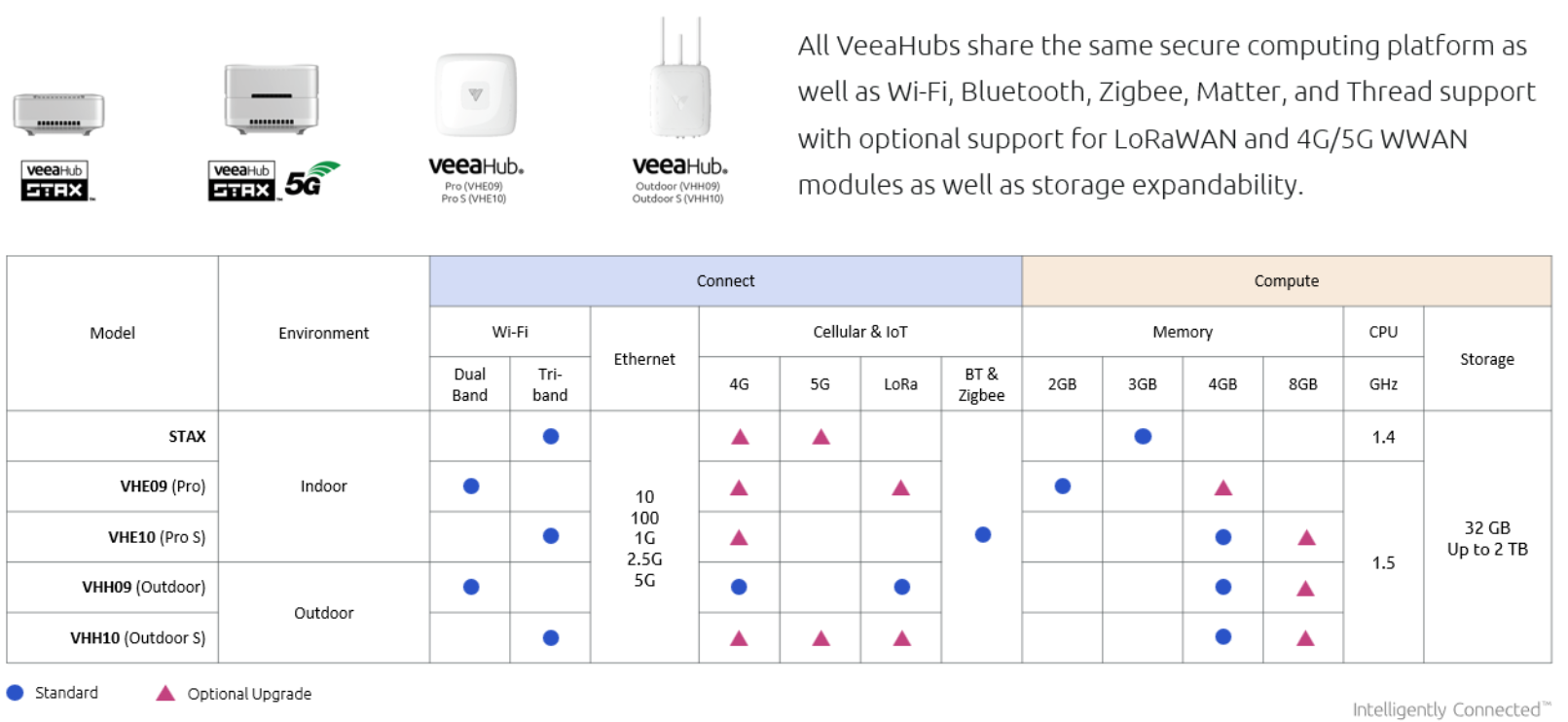
Based on the specifications provided, the VHE10 (Pro S) is currently the most capable indoor model and would generally be the recommended option for Containerized Niagara deployments.
VeeaHub VHE10 Datasheet - DS-156D.01EN.pdf
Key features include:
-
Tri-band Wi-Fi
-
Bluetooth and Zigbee support
-
Up to 8GB RAM
-
1.5GHz processor
-
10/100/1000/2.5G/5G Ethernet support
-
Up to 2TB expandable storage
-
Optional 4G/5G connectivity
-
Optional LoRaWAN support
For demanding supervisory applications, analytics workloads, MQTT services, and future expansion, the VHE10 Pro S offers the best balance of performance, flexibility, and connectivity.
Where outdoor installation is required, the VHH10 Outdoor S provides similar capabilities in a weather-resistant enclosure.
Why Forest Rock Likes the VeeaHub Platform
For organisations looking to modernise existing estates or deploy new smart building solutions, VeeaHub provides a practical example of how Containerized Niagara can be combined with:
-
LoRaWAN
-
MQTT
-
Wi-Fi
-
Bluetooth
-
Zigbee
-
Edge analytics
-
Remote management
on a single hardware platform.
The result is a highly flexible architecture capable of supporting smart building, energy management, ESG and Net Zero initiatives while reducing infrastructure complexity and ongoing operational costs.Tridium_Niagara_DOC_Niagara_Containerized_Solution (2)+1
This combination of Containerized Niagara and VeeaHub represents one of the most interesting deployment models currently available for edge-based smart building applications.
The result is a scalable and highly efficient edge-computing solution that can evolve as project requirements grow.
Procurement Flexibility
Customers are not required to purchase VeeaHub hardware through Forest Rock.
A flexible deployment model is available where:
-
The customer purchases and owns the VeeaHub hardware directly.
-
Forest Rock supplies the Containerized Niagara subscription.
-
Forest Rock provides deployment, professional services, integration and support services as required.
This approach allows customers to maintain ownership of their hardware investment while benefiting from Forest Rock's Niagara expertise and support capabilities.
Recommended VeeaHub Model
Based on the specifications provided, the VHE10 (Pro S) is currently the most capable indoor model and would generally be the recommended option for Containerized Niagara deployments.
Key features include:
-
Tri-band Wi-Fi
-
Bluetooth and Zigbee support
-
Up to 8GB RAM
-
1.5GHz processor
-
10/100/1000/2.5G/5G Ethernet support
-
Up to 2TB expandable storage
-
Optional 4G/5G connectivity
-
Optional LoRaWAN support
For demanding supervisory applications, analytics workloads, MQTT services, and future expansion, the VHE10 Pro S offers the best balance of performance, flexibility, and connectivity.
Where outdoor installation is required, the VHH10 Outdoor S provides similar capabilities in a weather-resistant enclosure.
Why Forest Rock Likes the VeeaHub Platform
For organisations looking to modernise existing estates or deploy new smart building solutions, VeeaHub provides a practical example of how Containerized Niagara can be combined with:
-
LoRaWAN
-
MQTT
-
Wi-Fi
-
Bluetooth
-
Zigbee
-
Edge analytics
-
Remote management
on a single hardware platform.
The result is a highly flexible architecture capable of supporting smart building, energy management, ESG and Net Zero initiatives while reducing infrastructure complexity and ongoing operational costs.
This combination of Containerized Niagara and VeeaHub represents one of the most interesting deployment models currently available for edge-based smart building applications.
Lower Cost Docker-Based Application Hosting
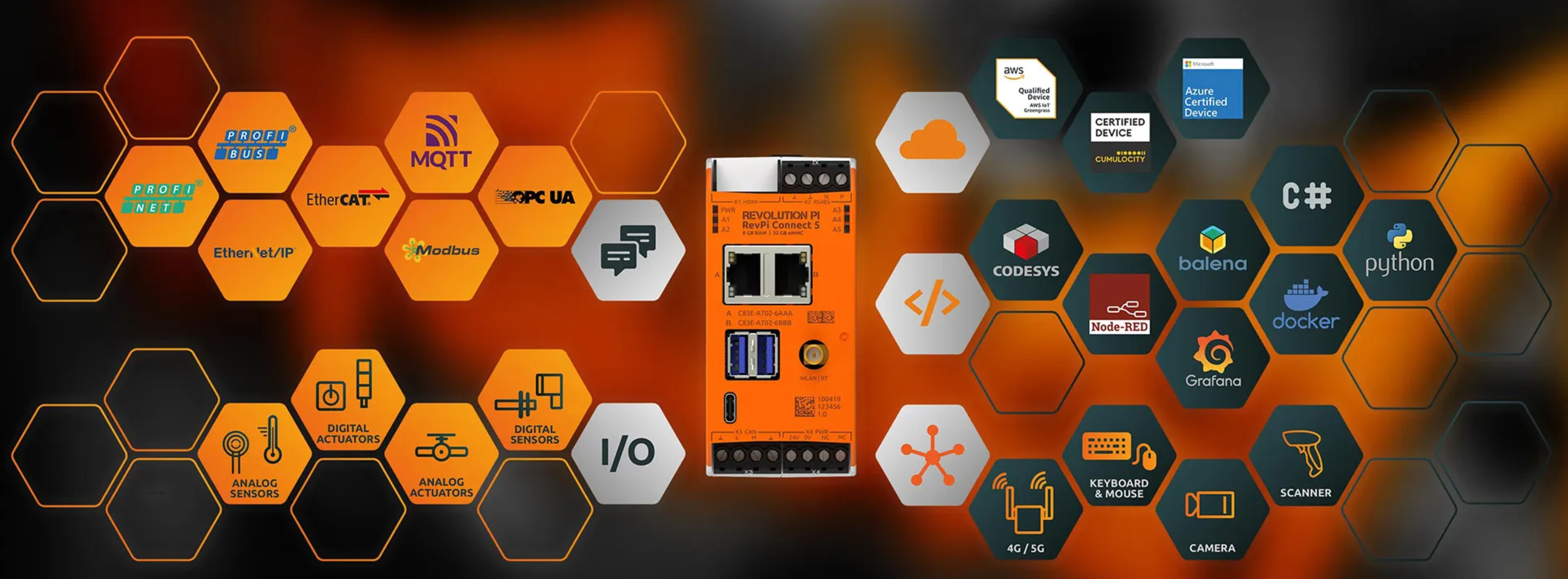
A Revolution Pi Connect 5 is one of the more credible low-cost platforms for running Containerized Niagara, especially if you're already looking at Docker-based deployments.
Why it fits
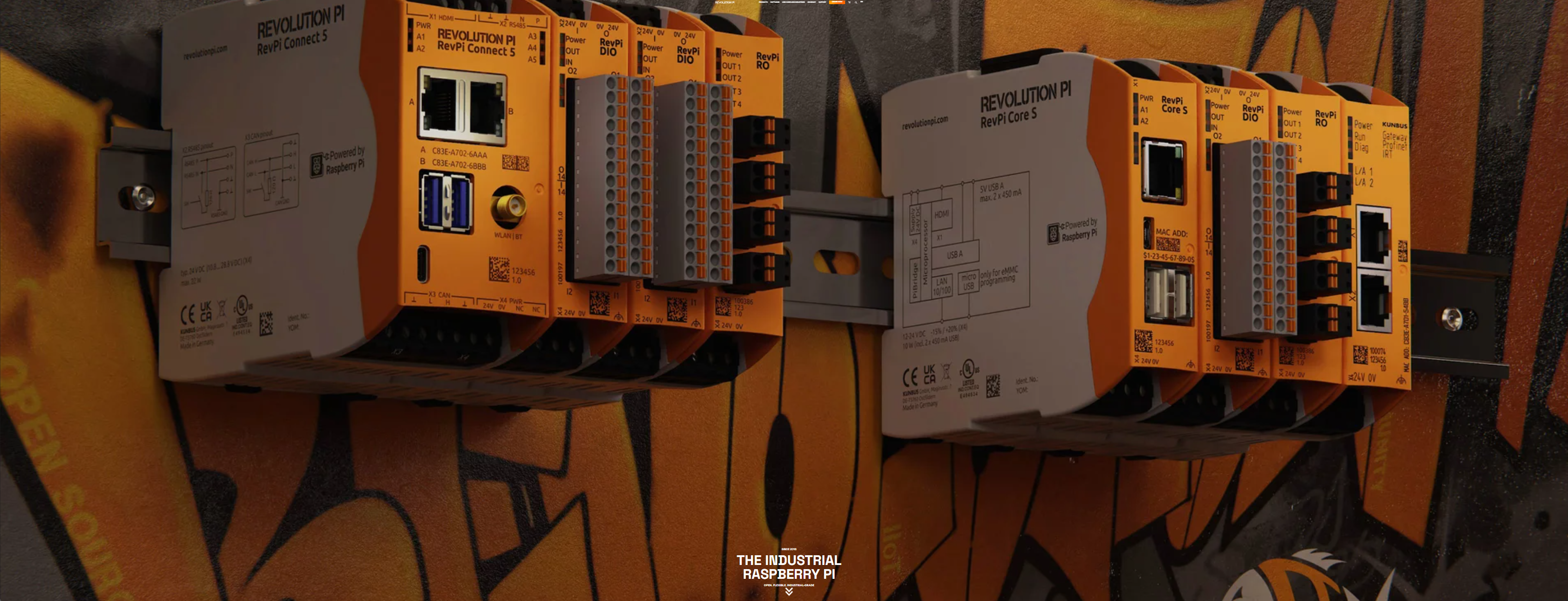
The RevPi Connect 5 is based on the Raspberry Pi Compute Module platform but packaged as an industrial device:
-
DIN rail mounting
-
24VDC supply
-
Industrial temperature range
-
Dual Gigabit Ethernet
-
Integrated UPS support options
-
Native Linux environment
-
Docker support
This means you can run:
-
Containerized Niagara
-
MQTT Broker (Mosquitto)
-
Node-RED
-
Grafana
-
InfluxDB
-
BACnet gateways
-
Modbus services
-
VPN clients (WireGuard/OpenVPN)
on a single device.
Advantages over Veea
|
Feature |
RevPi Connect 5 |
VHE10 Pro S |
|---|---|---|
|
Cost |
£350-£650 |
£1,500-£3,000+ |
|
Docker Support |
Excellent |
Excellent |
|
Niagara Containers |
Yes |
Yes |
|
DIN Rail |
Yes |
No (typically wall mount) |
|
BACnet/MQTT |
Yes |
Yes |
|
LoRaWAN |
External gateway required |
Optional integrated |
|
Cellular |
Optional modem |
Integrated options |
|
Edge AI |
Limited |
Better |
Things to watch
The RevPi is not as powerful as the VHE10.
For example, if you intend to run:
-
Large Niagara Supervisor
-
Thousands of histories
-
Analytics workloads
-
Database applications
-
Machine learning
then a small x86 industrial PC may still be a better option.
My Forest Rock Recommendation
For a typical building:
-
500–5,000 BACnet points
-
MQTT integration
-
Node-RED workflows
-
Grafana dashboards
-
Niagara Edge deployment
I'd seriously consider:
RevPi Connect 5 + Industrial SSD + Docker
instead of a VeeaHub.
For larger supervisory applications I'd jump straight to an OnLogic, Advantech UNO, or Intel NUC-class industrial PC, as they provide significantly more CPU and RAM while still costing less than a VHE10.
In fact, if the customer doesn't specifically need Veea's integrated LoRaWAN, 5G, Zigbee and mesh networking ecosystem, a RevPi Connect 5 is probably the closest budget industrial alternative for a containerized Niagara edge controller.
Other Resources & Customer Survey:
💬 Don't miss out! Follow the Forest Rock News channel on WhatsApp Click Here!
💬 We’d also love your feedback! Please take a moment to complete our quick Customer Survey
It only takes a minute and helps us serve you better!

IoT Devices for BMS, Automation & Smart Connectivity | Forest Rock