
Why Every Building Needs a Structured Digital Handover
By Paul Martin
Forest Rock Learning Academy
Executive Summary
The building industry has invested heavily in digital technologies over the last two decades.
Building Management Systems (BMS), smart meters, environmental sensors, energy analytics platforms, access control systems, EV charging infrastructure, renewable energy assets and cloud-connected applications have become commonplace across modern estates.
Despite these investments, many building owners face the same challenge at project completion:
Nobody knows exactly how the building works.
Documentation is often incomplete.
Point schedules are inconsistent.
Network architectures are poorly recorded.
Integration details are missing.
Critical engineering knowledge exists only in commissioning laptops, project emails or the memories of contractors who may no longer be involved.
As technology evolves, this loss of knowledge becomes increasingly expensive.
Forest Rock believes every modern building should be delivered with a Digital Building Passport.
A Digital Building Passport is a structured, living repository of operational, technical and data-management information that enables building owners to understand, maintain, secure, modify and improve their buildings throughout their lifecycle.
It is not simply a collection of manuals.
It is a living digital record of how the building operates.
The Hidden Handover Problem
Most building projects end with practical completion.
Operational success begins after practical completion.
Building owners frequently inherit:
-
PDFs containing outdated schematics
-
Incomplete point schedules
-
Missing BACnet object information
-
Unknown network configurations
-
Undocumented integrations
-
Inconsistent naming conventions
-
Lost commissioning records
Years later, organisations face questions such as:
-
Which controller serves this area?
-
What does this alarm actually mean?
-
Where is this sensor installed?
-
Which systems depend upon this network?
-
Can this controller be replaced?
-
Who owns this data?
Finding answers can take days, weeks or even months.
The building continues to operate.
The organisational knowledge continues to disappear.
Buildings Outlive Technology
A building may remain operational for:
-
30 years
-
50 years
-
75 years or more
Technology rarely survives that long.
|
Asset |
Typical Lifetime |
|---|---|
|
Sensors |
5-10 Years |
|
Controllers |
10-15 Years |
|
Servers |
3-7 Years |
|
Software Platforms |
Continuous Change |
|
Network Infrastructure |
5-15 Years |
The result is inevitable.
Equipment changes.
People change.
Contractors change.
Technology changes.
Data remains.
The challenge is not preserving equipment.
The challenge is preserving knowledge.
Forest Rock believes this can only be achieved through formal digital handover practices.
What Is a Digital Building Passport?
A Digital Building Passport is a structured repository of information that contains everything required to understand, operate, maintain, secure and evolve a building throughout its lifecycle.
Unlike traditional handover documentation, which is often delivered as a collection of disconnected manuals, drawings, spreadsheets and commissioning records, a Digital Building Passport provides a single source of truth for the building and its associated systems.
It captures not only what has been installed, but also how systems communicate, how data moves throughout the building and how future modifications can be made safely and efficiently.
A Digital Building Passport bridges the gap between project delivery and long-term operation by ensuring critical building knowledge remains accessible regardless of technology refreshes, supplier changes or personnel turnover.
Rather than being a static document, the passport should be treated as a living operational asset that evolves alongside the building itself.
As systems are upgraded, sensors replaced, controllers renewed and integrations modified, the passport should evolve with them.
Key Insight
A Building Management System controls a building. A Digital Building Passport explains the building.
Forest Rock Perspective
The objective of a Digital Building Passport is not to document technology. The objective is to preserve knowledge.
Figure 1: The Digital Building Passport
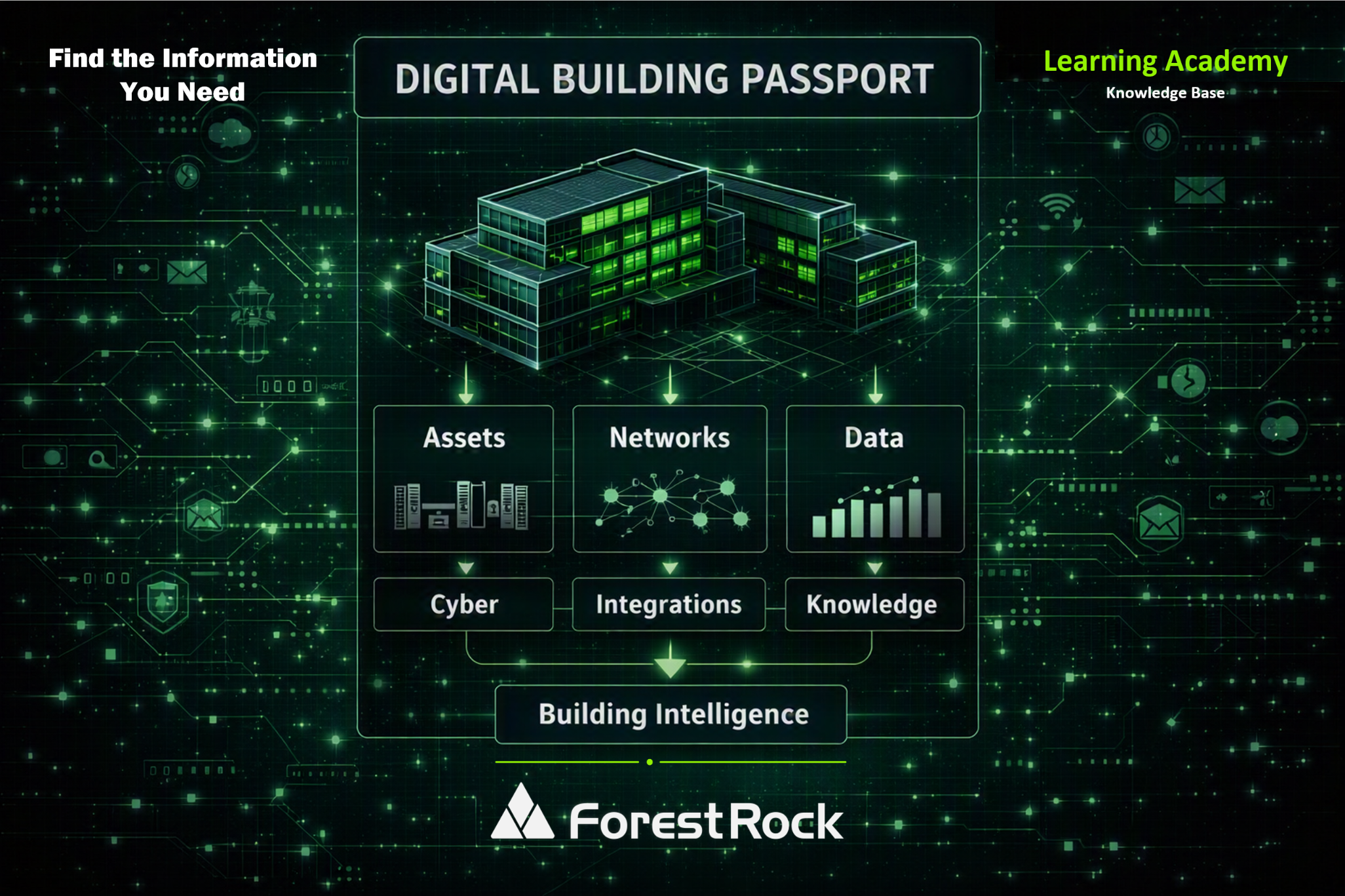
The Digital Building Passport provides a structured, continuously maintained record of assets, networks, integrations, operational data and cyber security information throughout the lifecycle of a building.
Forest Rock Digital Building Passport Principles
Principle 1: Preserve Knowledge
Information should survive the technology that created it.
Principle 2: Single Source of Truth
Building information should exist in one authoritative location.
Principle 3: Lifecycle Ownership
Documentation should be continuously maintained, not recreated.
Principle 4: Open Accessibility
Knowledge should remain available regardless of supplier changes.
Principle 5: Machine Readability
Where practical, information should be struct
The Five Layers of a Digital Building Passport
Layer 1: Asset Register
Every intelligent asset should be recorded.
This includes:
-
HVAC equipment
-
Meters
-
Lighting controllers
-
Access control systems
-
Sensors
-
IoT devices
-
Network equipment
Information should include:
-
Asset type
-
Manufacturer
-
Model number
-
Firmware version
-
Location
-
Installation date
A building owner should never need to physically inspect equipment simply to determine what is installed.
Layer 2: Connectivity Map
Modern buildings contain increasingly complex communications infrastructures.
A Digital Building Passport should document:
-
IP addressing schemes
-
VLAN structures
-
BACnet networks
-
Modbus networks
-
LoRaWAN infrastructure
-
MQTT architectures
-
API integrations
Many operational issues originate from connectivity problems rather than equipment failures.
Understanding the communications architecture is therefore essential.
Layer 3: Operational Data Model
Building data has little value without context.
For every point or data source, the passport should describe:
-
Point name
-
Description
-
Engineering units
-
Physical location
-
Asset relationship
-
Data ownership
Poor Documentation
AV42
Effective Documentation
Building A > AHU-3 > Supply Air Temperature
Context transforms data into information.
Layer 4: Cyber Security Baseline
Every connected building requires security documentation.
The Digital Building Passport should define:
-
Security zones
-
User roles
-
Authentication methods
-
Remote access mechanisms
-
Certificate management
-
Patch management processes
Cyber security should be treated as operational infrastructure rather than an isolated discipline.
Layer 5: Integration Inventory
Most modern buildings contain numerous integrations.
Examples include:
-
BACnet integrations
-
Modbus integrations
-
REST APIs
-
MQTT brokers
-
Energy platforms
-
ESG reporting systems
-
Digital twin environments
Each integration should document:
-
Source system
-
Destination system
-
Protocol
-
Purpose
-
Owner
-
Support responsibility
This prevents integrations from becoming invisible dependencies.
Forest Rock Digital Building Passport Checklist
Building owners should ensure that their Digital Building Passport includes the following:
Asset Information
✅ Asset Register
✅ Equipment Schedules
✅ Serial Numbers
✅ Firmware Versions
✅ Device Locations
✅ Installation Dates
Network Information
✅ IP Addressing
✅ VLAN Structures
✅ BACnet Topology
✅ LoRaWAN Architecture
✅ MQTT Infrastructure
✅ Routing Documentation
Data Information
✅ Point Schedules
✅ Metadata
✅ Semantic Tags
✅ Data Ownership
✅ Alarm Definitions
✅ Trend Records
Integration Information
✅ Source Systems
✅ Destination Systems
✅ Protocol Documentation
✅ API Documentation
✅ Integration Owners
✅ Support Responsibilities
Security Information
✅ User Roles
✅ Authentication Methods
✅ Certificate Inventory
✅ Remote Access Documentation
✅ Patch Management Procedures
✅ Security Zone Definitions
Operational Information
✅ Commissioning Records
✅ Backup Procedures
✅ Disaster Recovery Processes
✅ Maintenance Requirements
✅ Change Management Logs
✅ Support Contact Information
Forest Rock Recommendation
If a building cannot be understood without contacting the original contractor, the handover is incomplete.
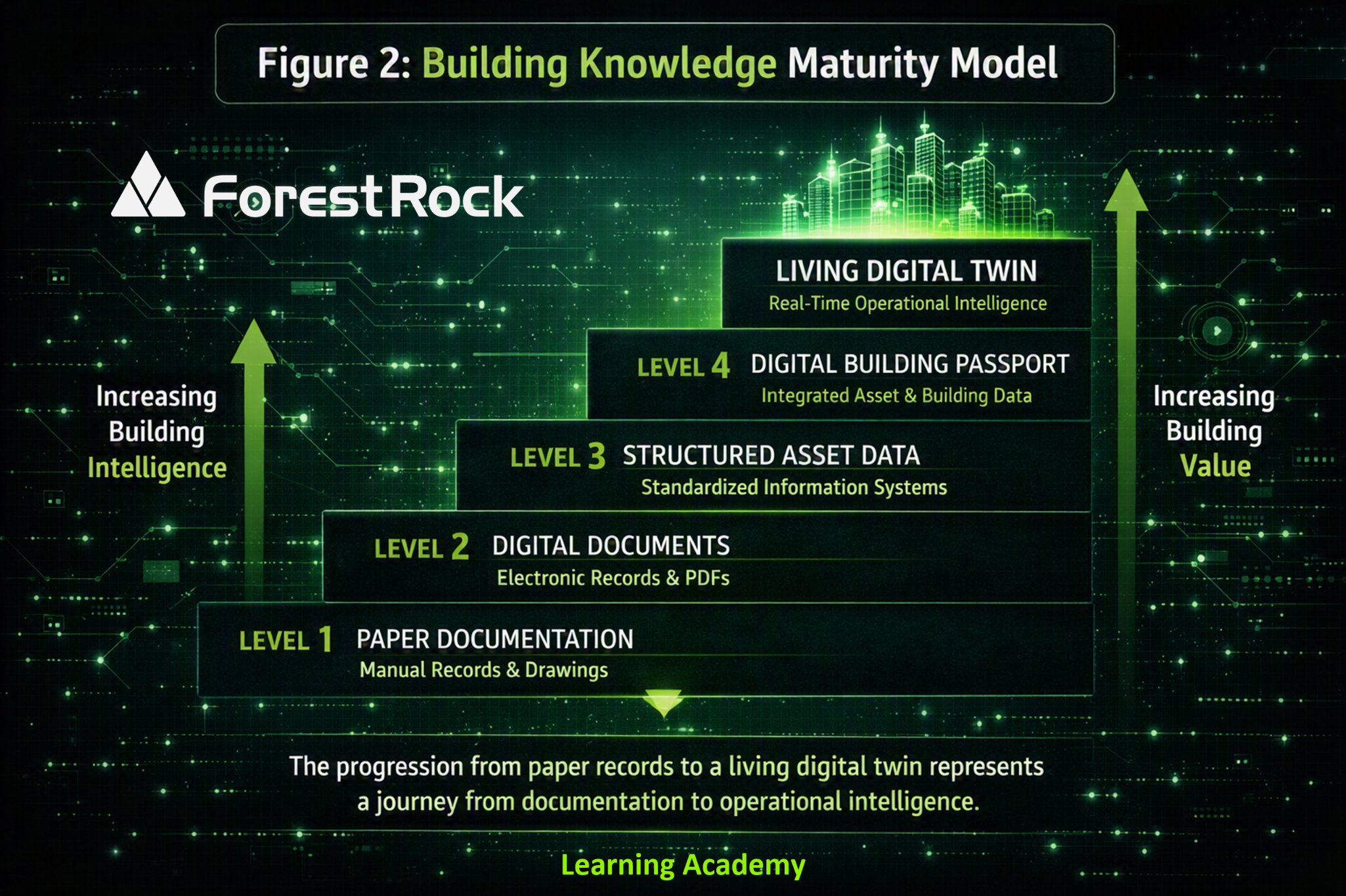
Figure 2: Building Knowledge Maturity Model
Understanding Building Knowledge Maturity
Not all buildings manage information in the same way.
Whilst some buildings continue to rely on paper drawings and archived commissioning records, others maintain sophisticated digital environments in which asset information, operational data and system relationships are continuously updated and available to operational teams.
The Building Knowledge Maturity Model illustrates the progression from traditional documentation towards a fully digital and continuously managed operational knowledge base.
Level 1 - Paper Documentation
Information exists primarily as paper drawings, manuals and handover documents.
Knowledge is difficult to locate and often becomes disconnected from the building as changes occur over time.
Level 2 - Digital Documents
Information has been digitised and stored electronically.
Whilst documents are easier to distribute and back up, they often remain disconnected and difficult to search.
Finding critical information may still require significant manual effort.
Level 3 - Structured Asset Data
Asset information becomes organised within structured databases, spreadsheets or management systems.
Equipment inventories, locations and maintenance records become easier to maintain and access.
Operational visibility improves significantly.
Level 4 - Digital Building Passport
Building information is consolidated into a structured and continuously maintained repository.
Assets, networks, integrations, cyber security information and operational data models are documented within a common framework.
Knowledge becomes an operational asset rather than a project deliverable.
Level 5 - Living Digital Twin
The building continuously updates its own digital representation.
Information flows automatically from operational systems into digital platforms, supporting AI, analytics, optimisation, predictive maintenance and advanced decision-making.
The Digital Building Passport becomes the foundation for intelligent building operations.
Forest Rock Perspective
Every building contains information.
Mature buildings preserve and manage that information.
The objective is not simply to move from paper documents to digital documents. The objective is to transform building knowledge into a strategic asset that continues to deliver value throughout the lifecycle of the building.
Real-World Example
Healthcare Estate Modernisation
Consider a hospital campus developed over twenty years.
Over that period, the site receives:
-
Multiple BMS upgrades
-
Additional lighting systems
-
Smart metering deployments
-
LoRaWAN sensor networks
-
Energy management platforms
-
New network infrastructure
Each project is delivered by different contractors and suppliers.
After two decades:
-
Original engineers have moved on.
-
Project documentation exists in multiple locations.
-
Network records are incomplete.
-
Integrations are poorly understood.
-
Operational knowledge exists only in individual teams.
Without a Digital Building Passport, every upgrade begins with a survey and discovery phase.
With a Digital Building Passport:
-
Asset ownership is known.
-
Network dependencies are documented.
-
Integrations are visible.
-
Data models are understood.
-
Operational risk is reduced.
The result is lower project cost, reduced downtime and faster decision-making.
Common Consequences of Poor Documentation
Poor documentation creates operational inefficiencies long after construction has finished.
Common consequences include:
-
Increased fault-finding time
-
Higher survey costs
-
Duplicate engineering effort
-
Delayed technology upgrades
-
Increased cyber security risk
-
Greater dependence on individual suppliers
In many buildings, operational teams spend more time identifying systems than resolving problems.
Forest Rock Observation
The most expensive part of many building upgrades is not installing new technology. It is understanding the existing technology.
Why Building Owners Should Care
A Digital Building Passport provides value long after construction teams have left site.
Reduced Operational Risk
Knowledge is retained even when personnel change.
Faster Maintenance
Engineers spend less time finding information.
Easier Technology Upgrades
New systems can be integrated faster with lower risk.
Improved Cyber Security
Infrastructure becomes visible and manageable.
Better Procurement
Future suppliers can understand existing systems without extensive surveys.
Greater Owner Independence
Operational knowledge remains with the owner rather than individual vendors.
Open Architecture and Building Passports
Digital Building Passports deliver the greatest value when paired with open architecture principles.
Forest Rock advocates:
-
BACnet for operational interoperability
-
LoRaWAN for scalable sensing
-
MQTT for data distribution
-
Open APIs for integration
-
Semantic tagging for context
These technologies make it easier to preserve, transfer and maintain building intelligence over time.
The objective is not simply to connect devices.
The objective is to preserve knowledge.
The Future: The Building Passport as a Living Asset
Historically, handover documentation has been treated as a project deliverable.
Forest Rock believes it should become an operational asset.
The Digital Building Passport should be updated whenever:
-
Equipment is replaced
-
Networks are modified
-
Integrations are added
-
Data models are expanded
-
Security policies are updated
Future Digital Building Passports may increasingly integrate with:
-
Digital twins
-
Asset management systems
-
BACnet discovery tools
-
AI-driven analytics platforms
-
Automated asset inventories
Rather than documenting buildings manually, future systems may increasingly document themselves.
The Digital Building Passport becomes the foundation upon which future building intelligence is built.
Forest Rock Open Architecture Principle #7
Information should survive the technology that created it.
Conclusion
The building industry has spent decades improving technology.
The next challenge is improving the way knowledge is preserved.
Buildings should not lose operational intelligence every time technology changes, contractors change or personnel change.
A Digital Building Passport ensures information remains accessible, understandable and reusable throughout the life of the building.
For building owners, the question should no longer be:
What technology was installed?
Instead, it should be:
What information will future generations inherit?
A building without a Digital Building Passport is equivalent to a vehicle without a service history.
The technology may still work.
But the confidence, understanding and long-term value are significantly reduced.
Paul Martin
Technical Lead, Forest Rock
"The most valuable asset in a smart building is not the controller, the sensor or the software platform. It is the information that allows future generations to understand and improve it."
A Digital Building Passport is not a handover document.
It is a knowledge preservation strategy.
“Whether you are planning a new development, modernising an existing estate or defining a long-term digital building strategy, Forest Rock can help design an open architecture that protects investment, maximises interoperability and unlocks the value of building data.”

Learn | Integrate | Innovate
Welcome to the Forest Rock Learning Academy.
Real Knowledge. Real Engineers. Real Solutions.
follow-up paper:
"The Open Building Data Model: From BACnet to AI"