

Learning Objectives
After reading this article you will be able to:
-
Define what a Building Management System is.
-
Explain the role of a BMS Engineer.
-
Identify key project stages.
-
Recognise common BMS documentation.
-
Understand the core skills required in the industry.
The Hidden Engineers Behind Every Modern Building
"What's a BMS Engineer?"
"After more than two decades working within building controls and building management systems, I still get asked the same question whenever I meet somebody new: "What exactly is a BMS Engineer?" The usual response when I explain is either a puzzled look or "I've never heard of that." Yet every day, millions of people occupy buildings that depend on BMS Engineers to keep them comfortable, safe and energy efficient.
Consider a modern hospital. Operating theatres require tightly controlled temperatures, air pressures and ventilation rates 24 hours a day. A BMS continuously monitors and manages these conditions, helping to maintain patient comfort, safety and regulatory compliance. Similar systems can be found everywhere from schools and office buildings to data centres and airports.
Despite being responsible for the comfort, safety, energy efficiency and operational performance of thousands of buildings, Building Management System (BMS) Engineers remain one of the least recognised engineering professions.
The reality is that almost every modern commercial building relies on a BMS. From local pubs and schools to hospitals, data centres, universities and multi-storey office blocks, Building Management Systems quietly manage the environments that people work, learn and live in every day.
A BMS Engineer is the specialist responsible for designing, installing, programming, commissioning and maintaining these systems, ensuring that buildings operate efficiently while minimising energy consumption and running costs.
What Does a Building Management System Do?
A Building Management System acts as the brain of a building.
It continuously monitors and controls plant equipment such as:
-
Boilers
-
Chillers
-
Air Handling Units (AHUs)
-
Heat Pumps
-
Ventilation Systems
-
Pumps
-
Variable Speed Drives (VSDs)
-
Domestic Hot Water Systems
-
Lighting Systems
-
Energy Meters
-
Refrigeration Plant
-
Critical Alarm Systems
Using a network of sensors, controllers and software, the BMS collects real-time information and makes intelligent decisions to maintain comfort and efficiency.
For example, a BMS can:
-
Reduce heating when areas are unoccupied
-
Optimise boiler sequencing
-
Control ventilation based on CO₂ levels
-
Monitor energy consumption
-
Generate alarms when equipment fails
-
Trend temperatures and plant performance
-
Integrate multiple building technologies into a single platform
The result is a smarter, safer and more energy-efficient building.
The Many Names of a BMS Engineer
Depending on the organisation or region, a BMS Engineer may also be known as:
-
Building Controls Engineer
-
Building Energy Management Systems (BEMS) Engineer
-
Controls Engineer
-
Building Automation Engineer
-
HVAC Controls Engineer
-
Automatic Controls Engineer
-
Smart Buildings Engineer
Regardless of the title, the core responsibility remains the same: controlling building services through intelligent automation.
How Do People Become BMS Engineers?
Unlike many engineering disciplines, there is no single route into Building Management Systems.
Most engineers transition from related fields such as:
-
Commercial Electrical Installation
-
HVAC Engineering
-
Heating and Plumbing Services
-
Mechanical Building Services
-
Refrigeration Engineering
-
Industrial Controls
-
Facilities Management
This blend of disciplines is what makes BMS engineering unique.
A successful BMS Engineer needs to understand both mechanical and electrical systems while also possessing strong software and networking skills.
"What Every New BMS Engineer Should Learn First"
For example:
-
HVAC fundamentals
-
Electrical controls
-
Sensor technology
-
Control theory
-
BACnet and Modbus
-
IP networking
-
Graphics and alarms
-
Trend analysis
-
Cyber security
-
Energy management
Skills Every BMS Engineer Needs
Building automation sits at the intersection of multiple engineering disciplines.
A competent BMS Engineer is expected to understand:
"Some Of The Key BMS Acronyms"
BMS Acronyms you need to know
|
Acronym |
Meaning |
|---|---|
|
BMS |
Building Management System |
|
AHU
|
Air Handling Unit |
|
VSD |
Variable Speed Drive |
|
P&I |
Plant & Instrumentation |
|
BACnet |
Building Automation and Control Network |
|
Modbus |
Industrial communication protocol |
There are many more to learn
Mechanical Systems
-
Boiler plant operation
-
Chilled water systems
-
Heat pump technology
-
Refrigeration cycles
-
Pumping systems
-
Air handling units
-
Ventilation systems
-
Valve selection and sizing
-
Heating and cooling distribution systems
Electrical Systems
-
Control panel design
-
Wiring regulations
-
Power distribution
-
Relays and contactors
-
Motor starters
-
Variable speed drives
-
Input and output devices
Software & Integration
Modern BMS Engineers are as likely to be working with:
-
Control strategy development
-
BMS programming
-
BACnet
-
Modbus
-
KNX
-
MQTT
-
Niagara Framework
-
Data analytics
-
Smart Building integration
As they are wiring a panel. As buildings become smarter and more connected, networking and cybersecurity knowledge are becoming increasingly important skills for modern BMS engineers. That's a significant change from the industry of 20 years ago.
Typical Career Paths of a BMS Engineer
Typical Career Progression
Trainee BMS Engineer
BMS Service Engineer
BMS Commissioning Engineer
Senior Engineer
Project Engineer
Technical Lead
Solutions Architect
Smart Buildings Consultant
Typical Responsibilities of a BMS Engineer
Every project is different, but the lifecycle of a Building Management System typically includes several key stages.
1. Control System Design
Every successful BMS project begins with a well-designed control system.
The design phase typically starts with reviewing:
-
Architectural drawings
-
Mechanical services drawings
-
Plant schematics
-
Consultant specifications
-
Performance requirements
-
Energy efficiency targets
For refurbishment projects, detailed site surveys are often required to understand existing plant and infrastructure.
The engineer must identify:
-
What equipment requires monitoring
-
What equipment requires control
-
What sensors are needed
-
How systems will interact
-
What alarms must be generated
The output becomes the foundation for the entire project.
2. Creating the BMS Points List
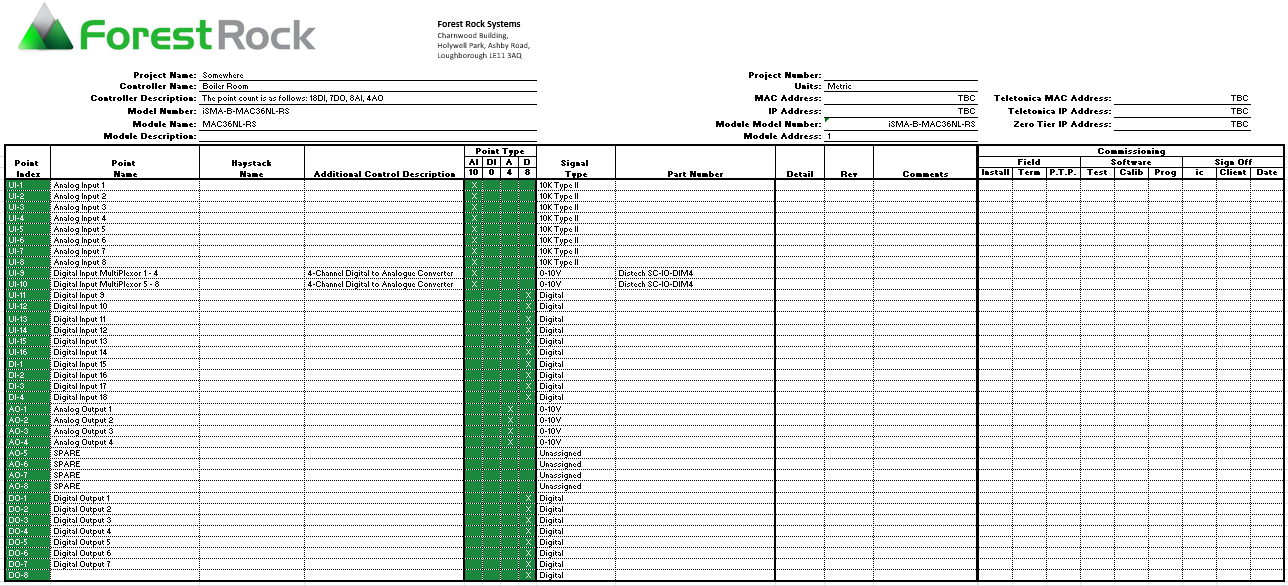
One of the most important design documents in any BMS project is the Points List.
A points list defines every connection between the BMS and the building plant.
Typical points include:
Analogue Inputs
-
Temperature sensors
-
Humidity sensors
-
Pressure sensors
-
CO₂ transmitters
Digital Inputs
-
Pump status
-
Boiler fault signals
-
Fire alarm interfaces
-
Flow switch status
Analogue Outputs
-
Modulating valve control
-
Variable speed drive control
-
Damper positioning
Digital Outputs
-
Pump enable signals
-
Boiler start commands
-
Fan operation signals
A well-structured points list becomes the roadmap for design, software development, commissioning and future maintenance.
Forest Rock Academy users can obtain a copy of the BMS Points List template from Paul Martin.
3. Producing P&I Drawings
-20260722-104200.png?cb=ff7b6c83dc0546082a44faccd5f01751)
Where existing documentation is incomplete or unavailable, engineers often create Plant and Instrumentation (P&I) Drawings to help the BMS design engineer select equipment and design the control software, whilst allocating points to the selected controller IO
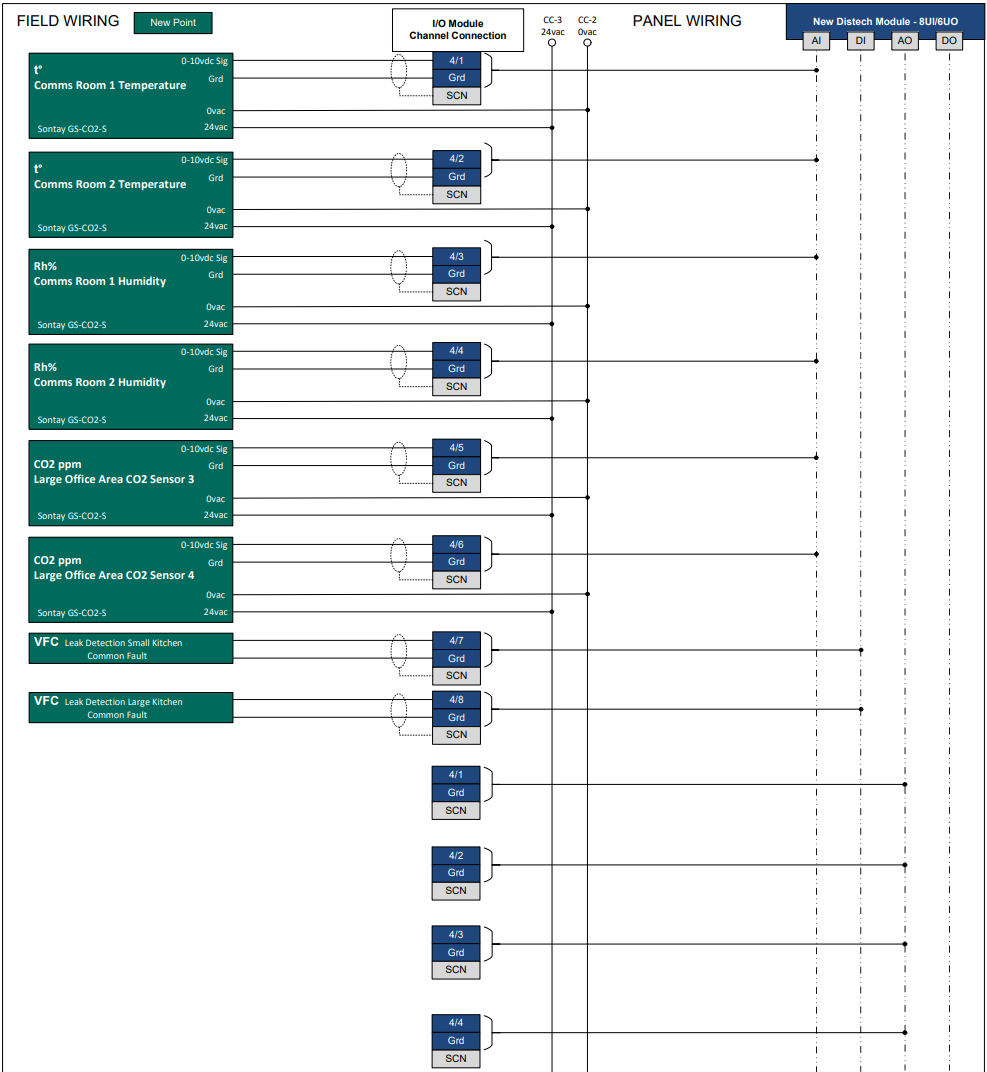
These drawings provide a visual representation of:
-
Pipework systems
-
Valves
-
Pumps
-
Boilers
-
Heat exchangers
-
Sensors
-
Control devices
P&I drawings allow both mechanical and controls engineers to clearly understand how systems operate and how the BMS interacts with the plant.
Software commonly used includes:
-
Microsoft Visio
-
AutoCAD
-
Revit
-
PowerPoint
-
Excel (for simple schematic development)
Good P&I drawings significantly reduce commissioning issues and improve long-term maintainability.
4. Control Panel Design
-20260722-104900.png?cb=1f4f8eae1c85cc755e1ce3338d7bc07b)
Once the plant strategy and points list have been defined, the control panel design can begin.
The controls design engineer or project engineer will determine:
-
Controller type
-
I/O requirements
-
Power supplies
-
Communications infrastructure
-
Network topology
-
Future expansion capacity
The control panel serves as the interface between the building plant and the BMS software.
A typical panel may contain:
-
BMS Controllers
-
I/O Modules
-
Power Supplies
-
Network Switches
-
Relays
-
Circuit Protection Devices
-
Terminal Rails
Illustration of a typical panel layout
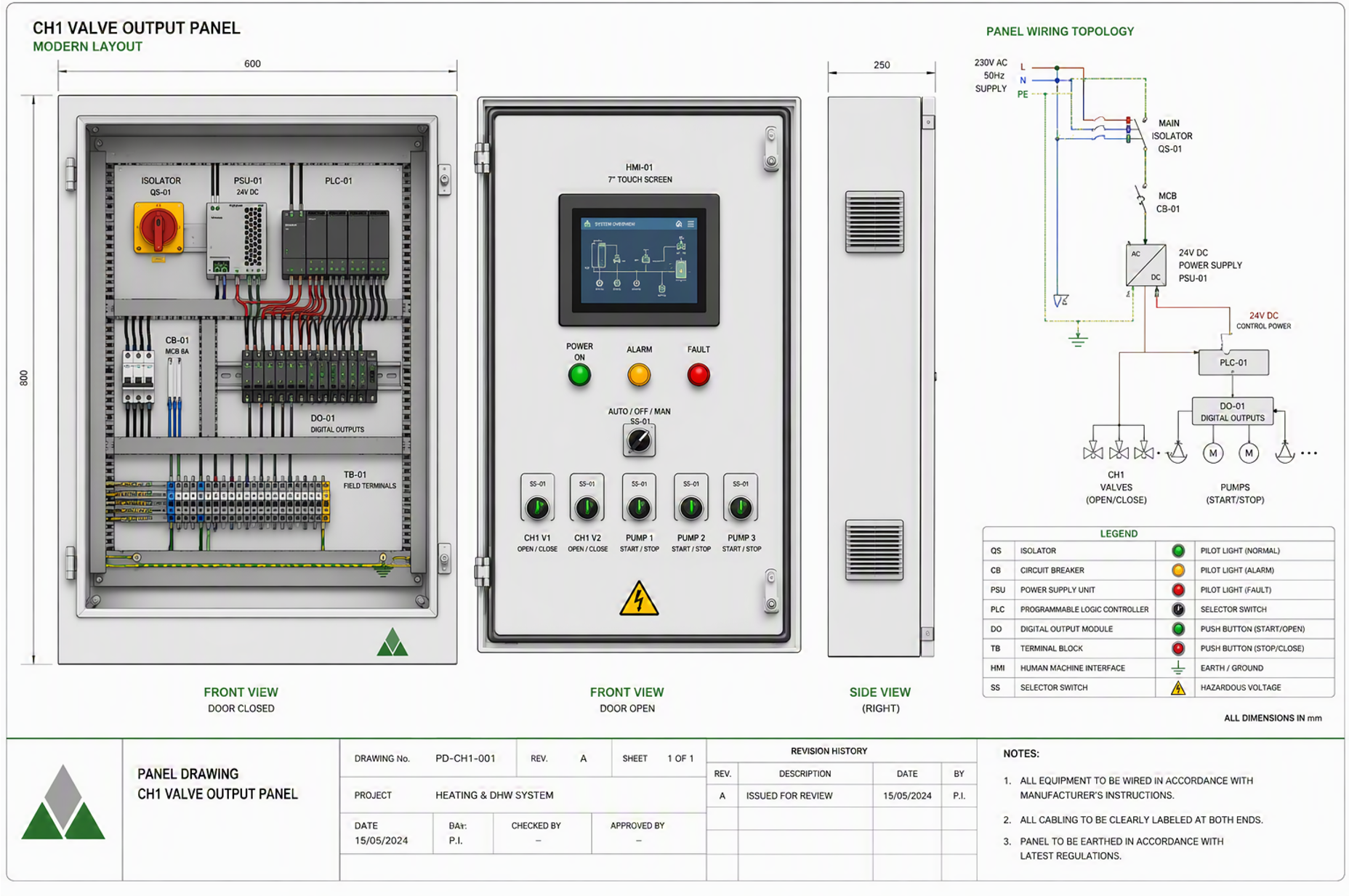
Good panel design is not simply about making everything fit, it is about producing a safe, maintainable and scalable system. There are lots of packages that can assist in panel design, from the traditional CAD package, I personally have created panel wiring templates in VISIO.
Good panel design is not simply about making everything fit, it is about producing a safe, maintainable and scalable system. There are lots of packages that can assist in panel design, from the traditional CAD package, or I personally have created panel wiring templates in VISIO in MS365 but EPLAN Electric P8 is often considered the industry benchmark for panel design and automation projects. It supports electrical schematics, cabinet layout, terminal plans, PLC design and automated documentation however its very expensive. If you want to look for some cheaper alternatives to try your hand at panel design, then take a look at this link.
EPLAN Electric P8 Alternatives - Explore Similar Software
The software may well be designed and coded up at this stage of the project as the software design engineer can refer to site drawings, P&I drawings and variuous points lists and IO point allocation lists. Although there aren't many BMS-specific online simulators, there are several free tools that teach the same control logic concepts used in Niagara, Trend, Distech, Schneider EcoStruxure and Siemens Desigo systems.
Useful for learning:
-
Occupancy logic
-
Lead/lag control
-
Alarm latching
-
Time delays
-
Pump and fan sequencing
Best Free Options
A. PLC Practice
A free browser-based ladder logic trainer with guided lessons, simulator, timers, counters, interlocks and HMI practice. No installation required. The logic principles are directly applicable to BMS control sequences.
B. PLC Simulator Online
Several sites now offer free browser ladder logic simulators with timers, counters and state machines
You can model:
-
Frost protection
-
Duty/standby pumps
-
VAV control states
-
Chiller staging
Free Ladder Logic Simulator — Learn Ladder Logic Online, No Install - PLC Simulator
C. Niagara-Specific Learning
Tridium University Free E-Learning
Tridium offers a free "Introduction to Niagara 4" course together with several other free online modules.
What you'll learn:
-
Niagara architecture
-
Components
-
Wire Sheets
-
Stations
-
Supervisors and JACEs
This is probably the best legitimate free starting point for Niagara training.
D. Niagara-Certified Training
Forest Rock offers a range of training solutions suitable for the needs of you and your team.
Become an expert in the Niagara 4 framework and other Tridium products. Learn how to use analytics with SkySpark for optimal energy utilization or how to use EnergyVision dashboards to manage and analyse building systems.

Get certified in Tridium Niagara 4.
Led by Forest Rock’s senior Niagara Engineers, this course is suitable for novices and experienced engineers alike. Deepen your BMS knowledge and elevate your qualifications with an official Tridium Niagara 4 certification.

The Niagara 4 Intermediate/Extend Certification is a 4‑day course that expands and enhances your knowledge of the Niagara Framework. This course is designed for system integrators and engineers who already hold the Niagara 4 Technical Certification Program (TCP), which is a pre‑requisite for enrolling.

A 2-day course for engineers who want to learn how to deploy the N4 EnergyManager benchmarking, analysis and dashboard software. This course will enable you to deliver advanced Energy Management capabilities to your clients, with advanced visualisation and analysis tools at their fingertips.
5. Installation & Commissioning
Once installation is complete, commissioning begins.
This is often where the BMS Engineer spends the majority of their time.
Commissioning activities include:
-
Verifying field wiring
-
Testing sensors
-
Calibrating instruments
-
Programming control strategies
-
Testing sequences of operation
-
Optimising plant performance
-
Proving alarms and safety interlocks
-
Producing documentation
The commissioning phase transforms a collection of components into a fully functioning intelligent building.
6. Optimisation and Ongoing Support
The work does not stop at handover.
The best BMS Engineers continuously analyse system performance to identify opportunities for improvement.
This may include:
-
Energy reduction projects
-
Trend analysis
-
Fault diagnostics
-
Setpoint optimisation
-
Seasonal adjustments
-
Plant upgrades
-
Smart building integrations
Many buildings continue to evolve long after completion, requiring ongoing engineering expertise to maintain peak performance.
Why BMS Engineers Matter
Modern buildings consume a significant proportion of global energy. Without effective control systems, much of that energy would be wasted.
BMS Engineers play a vital role in:
✅ Improving occupant comfort
✅ Reducing energy consumption
✅ Supporting sustainability goals
✅ Lowering operating costs
✅ Protecting critical infrastructure
✅ Extending equipment life expectancy
In hospitals, data centres and critical environments, their work can directly influence operational resilience and business continuity.
Final Thoughts
BMS Engineering is one of the most diverse and rewarding disciplines within building services engineering. It combines mechanical knowledge, electrical engineering, software development, networking and problem-solving into a single profession.
Most people may never have heard of a BMS Engineer, but every day thousands of buildings rely on these specialists to keep occupants comfortable, equipment running efficiently and energy consumption under control.
BMS Engineers rarely receive recognition from the people who use the buildings they control.
Yet every comfortable office, efficient hospital, productive university and resilient data centre depends on their expertise. In short, while architects design buildings and contractors construct them, BMS Engineers make them think.
Key Takeaways
-
A BMS is the brain of a building.
-
BMS Engineers combine mechanical, electrical and software skills.
-
Every project starts with understanding the plant and defining points.
-
Commissioning is where theory becomes reality.
-
Modern BMS Engineers increasingly require networking and cybersecurity knowledge.
Learn | Integrate | Innovate
Welcome to the Forest Rock Learning Academy.
Real Knowledge. Real Engineers. Real Solutions.