

Learning Objectives
By the end of this module, learners will be able to:
-
Understand the role of networking within modern Building Management Systems (BMS) and smart buildings.
-
Identify common network media used in building automation environments.
-
Recognise the purpose of switches, routers, gateways, and wireless infrastructure.
-
Explain the difference between nodes, hosts, and network services.
-
Understand the function of common building automation protocols such as BACnet, Modbus, KNX, MQTT, and REST APIs.
-
Differentiate between LAN, WLAN, and WAN architectures.
-
Understand the importance of network segmentation and cybersecurity within operational technology (OT) environments.
OT vs IT Networks
This has become one of the biggest challenges in modern projects.
Operational Technology (OT) networks focus on controlling physical processes such as HVAC, lighting, and energy systems, whereas Information Technology (IT) networks primarily manage business applications and user computing services. Although both often share Ethernet infrastructure, building automation systems have unique requirements including deterministic operation, long equipment lifecycles, and high availability. Successful smart building projects require close collaboration between OT and IT stakeholders.
-
Apply fundamental network design principles to smart building projects.
-
Perform basic network troubleshooting techniques used during commissioning and support activities.
-
Appreciate how professional network design contributes to system reliability, scalability, and long-term project success.
Estimated Reading Time: 12-15 minutes
Knowledge Level: Beginner to Moderate
Category: Forest Rock Learning Academy
Introduction to Building Networks for Smart Buildings
Beginner to Moderate Level Engineers & Consultants
Why Networks Matter in Modern Building Management Systems
Modern smart buildings depend on information. Every temperature sensor, energy meter, lighting controller, HVAC system, and software platform generates or consumes data that must move reliably between devices.
The network serves as the digital foundation connecting these systems. Without robust communications, even the most advanced controllers and software platforms become isolated components unable to deliver meaningful value.
For engineers and consultants, networking knowledge is no longer optional. Understanding how devices communicate enables faster commissioning, more effective troubleshooting, improved system performance, and better long-term outcomes for building owners and operators.
As smart buildings continue to evolve, networking skills have become one of the most important competencies within the building automation industry.
Understanding Smart Building Networks
At its simplest, a building network is a structured communication system that allows devices to exchange information.
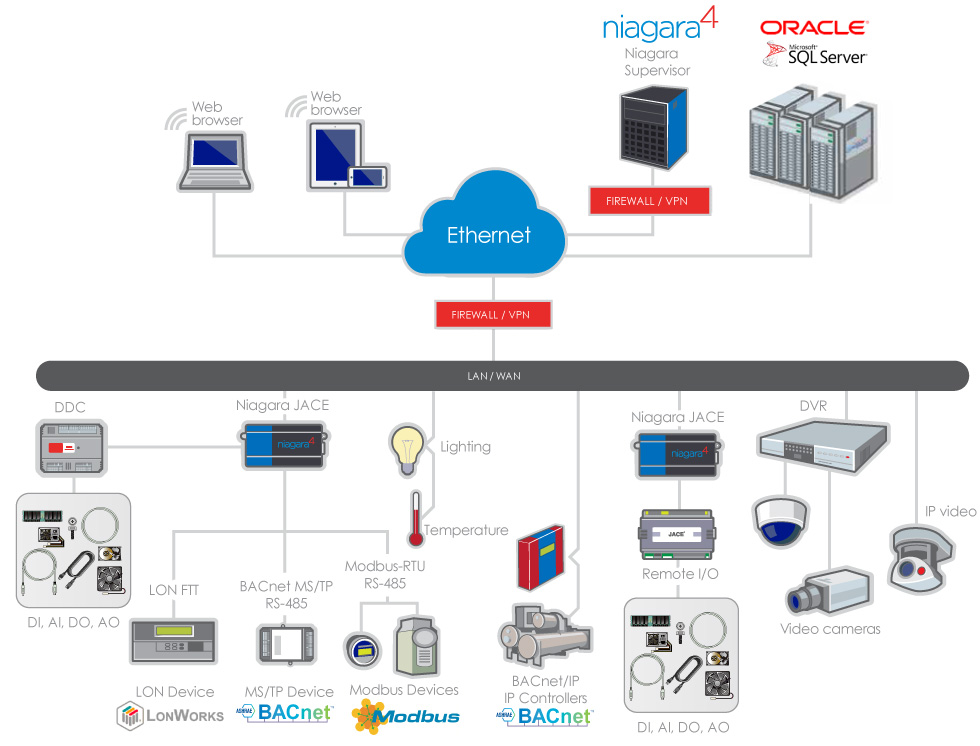
Within a typical smart building, the network provides the communication backbone that connects a wide range of devices and systems, including:
-
Sensors and field devices
-
Energy meters
-
Actuators
-
Building controllers
-
Integration gateways
-
Supervisory servers
-
Cloud platforms
-
User dashboards and mobile applications
These devices exchange information across physical infrastructure such as copper cabling, fibre optic networks, and wireless technologies. Communication protocols define how data is formatted, transmitted, and interpreted between connected devices.
When designed and implemented correctly, the network enables otherwise independent systems to operate as a unified and intelligent building ecosystem, improving visibility, efficiency, and control.
What Is a Network?
A network is a collection of two or more devices connected together for the purpose of sharing information and resources. Networks can range from a simple connection between two devices to large, complex infrastructures spanning multiple buildings or geographical locations.
A network typically consists of a combination of hardware, software, firmware, and communication protocols. Regardless of size or complexity, all networks share several common elements:
Media
The physical or wireless medium used to transport information between devices. Examples include twisted-pair copper cabling, fibre optics, and radio frequency communications.
Network Communication Devices
Equipment that directs, manages, or distributes network traffic, such as switches, routers, hubs, and wireless access points.
Nodes or Devices
Any device connected to the network. Most networked devices include a Network Interface Card (NIC) or equivalent communication interface.
Hosts
Devices that provide or consume services on the network, such as client workstations, servers, building controllers, or supervisory systems.
Resources
The information or services shared across the network. In a Building Management System (BMS), examples include sensor readings, alarm data, schedules, trends, and control commands.
Common Network Types in Building Management Systems
Several network types are commonly encountered within Building Management Systems:
-
Local Area Network (LAN) – Connects devices within a limited area such as a building or plant room.
-
Wireless Local Area Network (WLAN) – Provides network connectivity using wireless technologies rather than physical cabling.
-
Wide Area Network (WAN) – Connects multiple sites across larger geographical areas.
-
Campus Area Network (CAN) – Interconnects multiple buildings within a campus, hospital, university, or business park.
Common Network Topologies
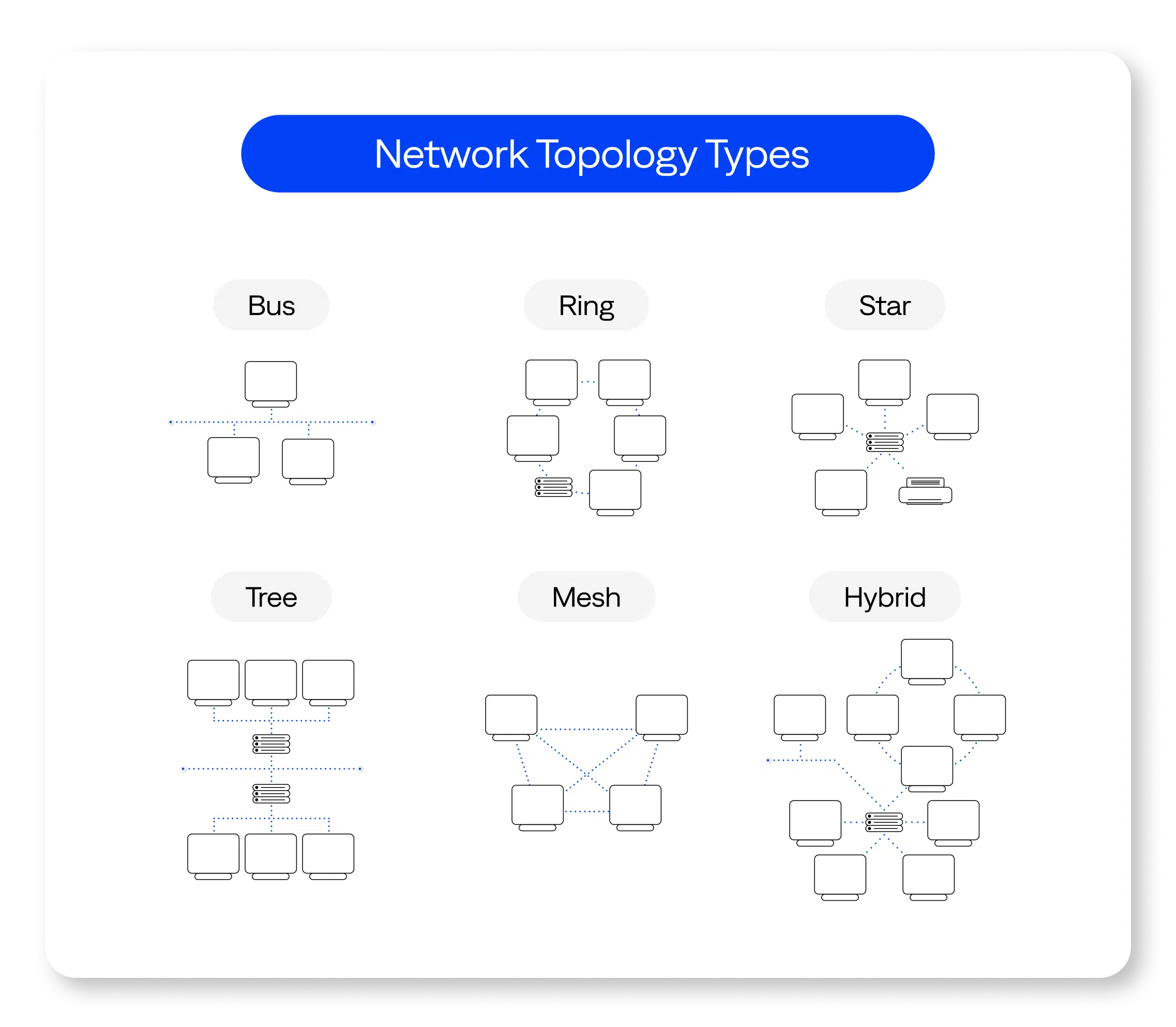
Network topology describes the physical or logical arrangement of devices and communication paths within a network.
Common topologies include:
-
Bus Topology – All devices share a common communication backbone.
-
Star Topology – Devices connect to a central switch or hub.
-
Ring Topology – Devices are connected in a closed loop. Modern Ethernet networks often use protocols such as Rapid Spanning Tree Protocol (RSTP) to provide resilience while preventing switching loops.
-
Peer-to-Peer Topology – Devices communicate directly with one another without relying on a central server.
-
Tree Topology – A hierarchical structure consisting of multiple interconnected star networks.
-
Mesh Topology – Devices have multiple communication paths, providing increased resilience and redundancy.
Key Concepts Every Engineer Should Know
1. Network Media
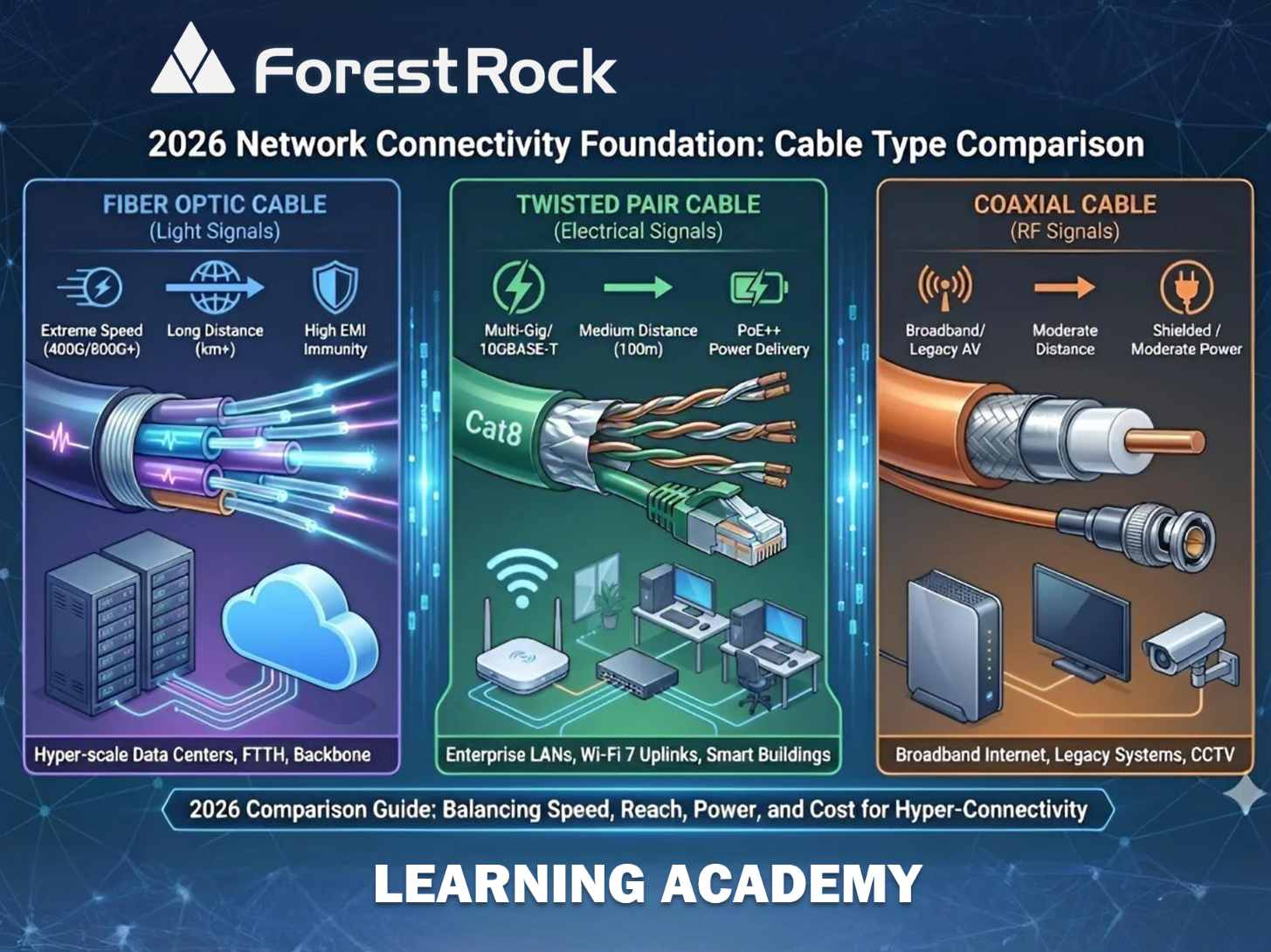
Network media refers to the physical or wireless method used to transport data between devices.
Common examples include:
-
Twisted-pair Ethernet cabling for high-speed local connectivity between controllers, servers, and network infrastructure.
-
Fibre-optic cabling for long-distance, high-bandwidth, and electrically isolated communications.
-
Wi-Fi networks for mobile access, wireless sensors, and retrofit applications.
-
Cellular communications (4G/5G) for remote monitoring, cloud connectivity, and sites without fixed internet connections.
-
LoRaWAN (Long Range Wide Area Network) for low-power IoT devices such as environmental sensors, utility metering, and remote asset monitoring across large areas.
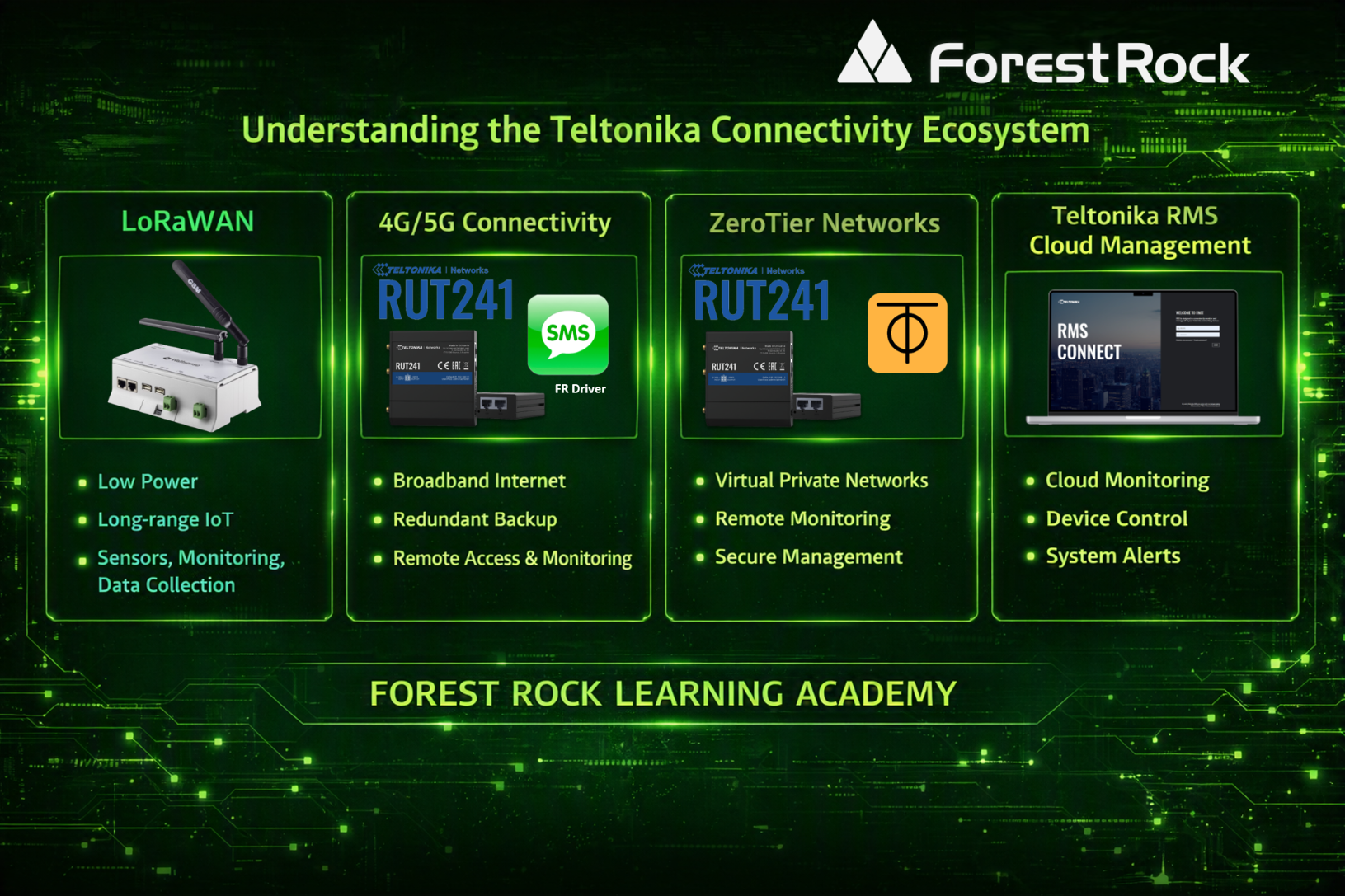
Each medium offers different advantages in terms of speed, range, power consumption, reliability, and installation cost. Selecting the appropriate technology and solution is a key part of designing a robust and scalable smart building network.
Why Media Selection Matters
The choice of network media plays a significant role in the overall performance and success of a smart building system. Different technologies offer varying levels of speed, reliability, coverage, and flexibility, making them suitable for different applications.
When selecting communication medium's, engineers should consider:
-
Data transmission speed and bandwidth requirements
-
Reliability and resilience in the operating environment
-
Installation and maintenance complexity
-
Project and lifecycle costs
-
Coverage and communication range
-
Power consumption, particularly for battery-powered devices
-
Future scalability and expansion requirements
No single technology is ideal for every application. Understanding the advantages and limitations of Ethernet, fibre, Wi-Fi, cellular connectivity, and LoRaWAN enables engineers to design networks that are both technically effective and commercially practical, ensuring long-term performance and adaptability as building requirements evolve.
2. Network Devices
Network devices manage how information travels throughout a building.
Key examples include:
-
Switches - Connect devices within a local network.
-
Routers - Connect different networks together.
-
Gateways - Translate information between protocols or systems.
-
Wireless Access Points - Provide Wi-Fi connectivity.
These devices form the backbone of modern building infrastructure and directly influence network performance and reliability.
3. Nodes and Hosts
A node is any device capable of sending or receiving data.
Examples include:
-
Sensors
-
Controllers
-
Workstations
-
Smart meters
A host is a device that provides services to other devices on the network.
Examples include:
-
Niagara supervisors
-
Historian servers
-
Cloud applications
-
Database servers
Understanding these roles helps engineers visualise how information flows through a system.
4. Protocols
Protocols are the agreed rules that devices use when exchanging information.
Common smart building protocols include:
-
BACnet
-
Modbus
-
KNX
-
MQTT
-
REST APIs
Each protocol has specific strengths and use cases. Successful system integration often depends on understanding how these protocols operate and how they interact with one another.
Network Architectures Commonly Used in Smart Buildings
Modern smart buildings rely on a variety of network architectures to connect devices, transport data, and support operational technology (OT) systems. Understanding when and where each network type is used helps engineers design systems that are reliable, scalable, and secure.
Local Area Networks (LAN)
A Local Area Network (LAN) is the core communications infrastructure used to connect building systems within a defined area, such as a plant room, floor, building, or campus.
In a modern smart building, a LAN typically provides connectivity between:
-
Building and field controllers
-
Edge devices and gateways
-
Niagara Supervisors and BMS servers
-
Engineering workstations
-
Energy monitoring systems
-
Third-party integrations
-
Networked sensors and actuators
Most Building Management Systems (BMS) operate over Ethernet-based LANs because they offer high-speed, reliable, and low-latency communications. This allows large volumes of operational data to be exchanged quickly between devices, supporting real-time control, monitoring, alarming, and analytics.
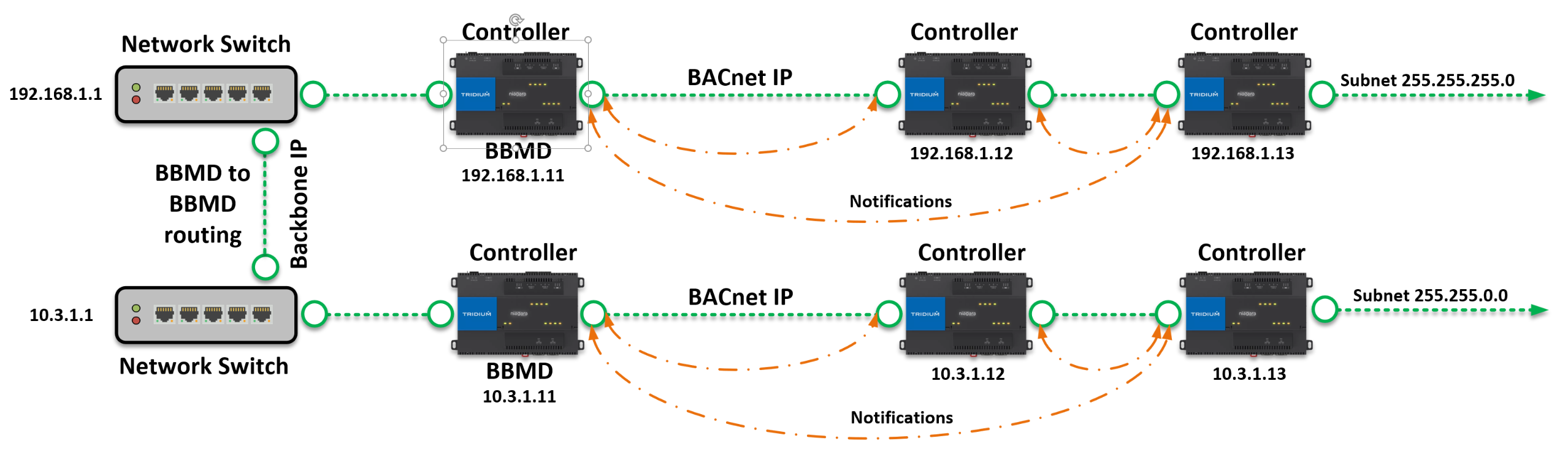
As building technology has evolved, networking is no longer limited to connecting controllers back to a central switch. Many modern edge controllers and field controllers, including some FCU (Fan Coil Unit) controllers, now support IP daisy-chain technology through integrated Ethernet switch ports.
This allows multiple controllers to be connected in series using standard Ethernet cabling, reducing the number of home-run cables required back to network switches. Benefits include:
-
Reduced cabling costs
-
Faster installation times
-
Fewer switch ports required
-
Simplified deployment of large controller networks
-
Greater flexibility during refurbishments and retrofit projects
While IP daisy chaining can provide significant installation advantages, engineers must still consider network resilience, bandwidth requirements, controller limitations, and the impact of any single cable failure on downstream devices.
When designed correctly, an Ethernet LAN provides the foundation for a reliable, scalable, and maintainable smart building infrastructure, supporting everything from plant-room controllers to cloud-connected analytics platforms.
Real-World Example:
A modern office may contain a number of FCU controllers per floor, connected using Ethernet daisy-chain technology. The controllers communicate with a Niagara Supervisor via a building LAN Backbone IP network, allowing engineers to monitor temperatures, alarms and equipment status from a central workstation.
Wireless Networks (WLAN)
A Wireless Local Area Network (WLAN) enables devices to communicate without the need for physical network cabling.
Wireless technologies are commonly deployed for:
-
Retrofit and refurbishment projects
-
Temporary installations
-
Mobile engineering access
-
Wireless sensors and IoT devices
-
Areas where cabling is difficult or impractical
While wireless connectivity offers flexibility and reduced installation costs, it requires careful consideration of signal strength, interference, network capacity, and cybersecurity to ensure reliable operation.
Wide Area Networks (WAN)
A Wide Area Network (WAN) connects systems across multiple geographically separated locations.
Typical applications include:
-
Multi-building campuses
-
Hospital and healthcare estates
-
Corporate property portfolios
-
Remote monitoring platforms
-
Cloud-hosted BMS and analytics solutions
WAN connectivity allows data from multiple sites to be consolidated into a central platform, giving building owners and facilities teams greater visibility, reporting capabilities, and operational control.
Low-Power Wide Area Networks (LPWAN)
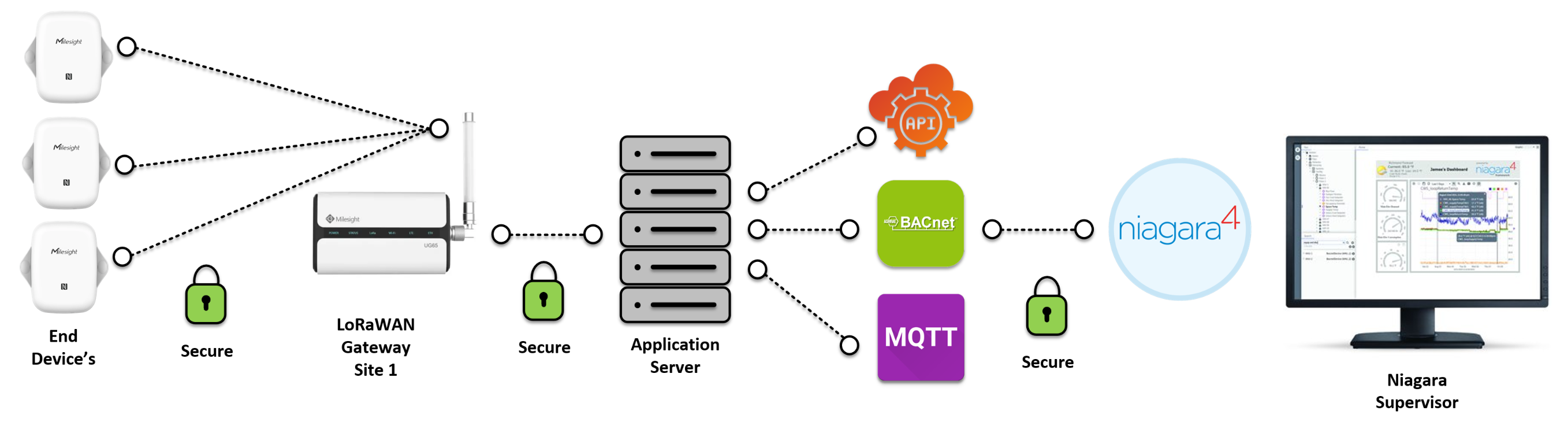
In addition to traditional LAN and WAN technologies, many smart buildings now incorporate Low-Power Wide Area Networks (LPWANs) such as LoRaWAN.
LPWAN technologies are particularly suited to:
-
Environmental monitoring
-
Utility metering
-
Occupancy sensing
-
Water leak detection
-
Remote asset monitoring
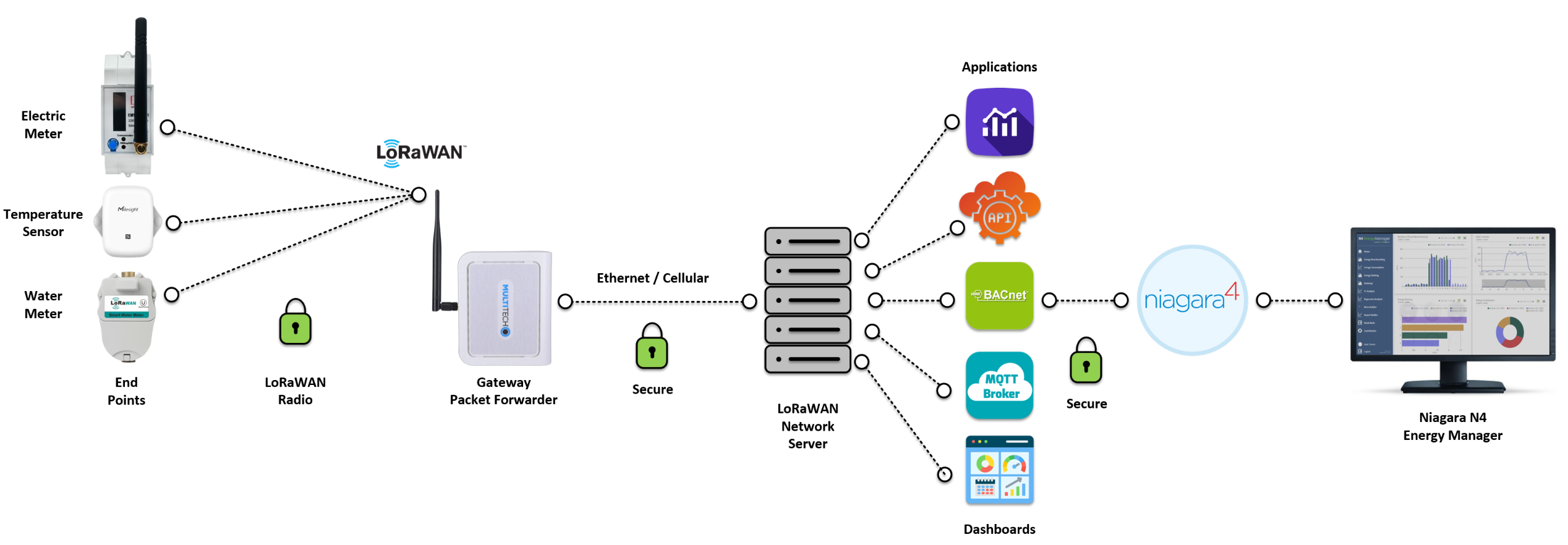
Their ability to support battery-powered devices over long distances makes them ideal for large sites where installing traditional network infrastructure would be expensive or impractical.
Network Segmentation and Security
As building systems become increasingly connected, cybersecurity must be considered from the earliest stages of network design.
Modern smart building networks often incorporate:
-
VLANs (Virtual Local Area Networks)
-
Firewalls
-
VPNs (Virtual Private Networks)
-
Secure gateways
-
Role-based access controls
-
Network monitoring and intrusion detection
Segmentation allows critical building systems to be isolated from corporate IT networks and external services, reducing risk and improving resilience. A properly segmented network helps contain faults, simplifies troubleshooting, and provides an additional layer of protection against cyber threats.
For today's BMS engineers and consultants, a basic understanding of network architecture and security principles is no longer a specialist skill. It is a fundamental requirement for delivering professional, future-ready smart building solutions.
Network Design Principles for BMS Engineers
Keep It Simple
Simple network layouts are easier to understand, commission, document, and maintain.
Avoid unnecessary complexity wherever possible.
Plan for Growth
Buildings rarely stay static.
Future requirements may include:
-
Additional controllers
-
Expanded monitoring capability
-
New integrations
-
Increased data collection
Designing for scalability helps avoid expensive upgrades later.
Prioritise Reliability
Building systems often support critical environments.
Reliable networks are achieved through:
-
Quality infrastructure
-
Appropriate switch selection
-
Redundancy where required
-
Professional installation practices
A stable network reduces downtime and support costs.
Document Everything
Documentation is one of the most valuable assets a project can deliver.
A complete network package should include:
-
IP addressing schedules
-
VLAN allocations
-
Network topology diagrams
-
Device inventories
-
Cable schedules
-
Integration architecture drawings
Good documentation simplifies commissioning, troubleshooting, future expansion, and lifecycle management.
Troubleshooting Basics
Before escalating any network issue, engineers should verify the fundamentals.
Beginner Checks
-
Is the device powered?
-
Is the network cable connected?
-
Are status LEDs showing normal operation?
-
Does the device have the correct IP address?
-
Can the device be pinged?
-
Is the switch port active?
-
Is the protocol configured correctly?
A significant percentage of field issues can be resolved through these simple checks.
Intermediate-Level Diagnostics
More experienced engineers should also understand:
-
Network latency
-
Bandwidth utilisation
-
Basic packet capture techniques
-
Switch diagnostics
-
BACnet discovery tools
-
Modbus communication testing
-
MQTT broker connectivity analysis
Developing these skills enables faster fault diagnosis and more efficient technical support.
How Forest Rock Engineers Approach Network Design
At Forest Rock, network infrastructure is viewed as a critical component of every smart building project.
Our design philosophy focuses on five core principles:
Interoperability
Systems should communicate seamlessly regardless of manufacturer or protocol.
Scalability
Networks must support future integration opportunities and technological growth.
Security
Cybersecurity considerations are included from the earliest design stages.
Clarity
Clear documentation and network topology diagrams are provided to support operations and maintenance teams.
Efficiency
Solutions are designed to minimise installation effort while maximising long-term reliability and performance.
This methodology helps deliver successful outcomes across projects ranging from small commercial buildings to complex multi-site estates.
Summary
Networking forms the foundation of every modern smart building. Whether connecting sensors to controllers, integrating energy meters, enabling cloud analytics, or providing remote engineering access, reliable communications are essential.
By understanding network media, devices, architectures, protocols, design principles, and troubleshooting techniques, engineers and consultants can build the knowledge needed to design, commission, and maintain robust smart-building solutions.
As building systems become increasingly connected and data-driven, network knowledge will continue to be one of the most valuable skills in the modern building automation engineer's toolkit.
Key Take Away
Edge Computing
Many modern smart buildings now perform analytics and decision-making at the edge, reducing bandwidth requirements and improving system responsiveness.
Next Module
Introduction to IP Addressing and Subnetting for Building Management Systems
Learn how IP addressing works, how devices find each other on a network, and how subnetting improves scalability, performance, and security within smart building environments.
If you need more help:
Then why not contact our sales or support team.

sales@forestrock.co.uk or support@forestrock.co.uk
Learn | Integrate | Innovate
Welcome to the Forest Rock Learning Academy.
Real Knowledge. Real Engineers. Real Solutions.